You have picked the car and agreed the price, and then the paint protection package comes up. It usually arrives with a brochure, a warranty card and a price that can add hundreds of dollars to the deal. It is fair to ask whether it is worth it, and whether a ceramic coating or paint protection film from a detailing studio would do the job better. Here is what to ask, what your rights are in Ontario, and what a new car's paint actually needs.
The short answer
- A dealer paint protection package is optional. You can decline it, or ask exactly what it is before you decide.
- Find out whether it is a sealant or a coating. Consumer Reports describes paint sealants as little more than a wax that wears off within months, and rates ceramic coatings as the more useful product.
- Ontario's all-in pricing rule protects you. A product already on the car must be in the advertised price. Only HST and licensing go on top, plus any optional extras you agree to.
- New paint still needs preparation. Lot washing and transport can leave swirls and bonded contamination that a coating or film would seal in.
- Coating and film do different jobs. A ceramic coating adds gloss and makes washing easier. Paint protection film stops stone chips. Many new car owners combine both.
- The best time is soon after delivery, before the first highway kilometres and the first winter of road salt.
What the dealer's paint protection package usually is
Dealer packages vary from one dealership to the next, which is exactly why it pays to ask. Depending on where you buy, it can be a paint sealant, a ceramic coating applied by an outside company, or a bundle that adds interior fabric protection and rustproofing. Consumer Reports' advice on dealership extras is blunt. It describes the interior protection as a pricey spray-on fabric protector and paint sealants as little more than a wax that wears off within a few months. It treats ceramic coatings differently, as a more useful product that needs a specific application process, but notes that the dealer usually has a vendor do the work and marks up the price. Its suggestion is to compare quotes from local detailing shops after you take delivery.
Before you agree to a package, ask:
- What product is it, by brand and name? "Paint protection" on its own tells you nothing. A sealant, a ceramic coating and a film are very different things.
- Who applies it, and how is the paint prepared first? A coating bonds to whatever is underneath it, so a quick wipe over lot swirls locks the swirls in.
- What does the warranty cover, and who backs it? Read what it excludes and what it asks of you, such as yearly inspections or approved wash products.
- Is it already on the car? If so, it should already be in the advertised price.
- What does it cost on its own? Ask for it as a separate line so you can compare it with a quote from a detailing studio.
Your rights in Ontario: all-in pricing
OMVIC, which regulates vehicle sales in Ontario, requires all-in price advertising. The price advertised for a vehicle must include every fee and charge the dealer intends to collect, with the exception of HST and licensing, and OMVIC lists pre-installed products and services among the charges that must be included. Every fee in the advertised price must also be itemized separately on the bill of sale. In practice:
- If a protection product was put on the car before it was advertised, its cost belongs in the advertised price, not on top of it.
- A package offered to you after you agree the price is an optional extra, and you can say no.
- If a dealer tries to add fees to an advertised price, OMVIC's advice is to walk away, shop elsewhere and report the dealer to its Complaints and Inquiries Department.
Why a brand new car still needs paint preparation
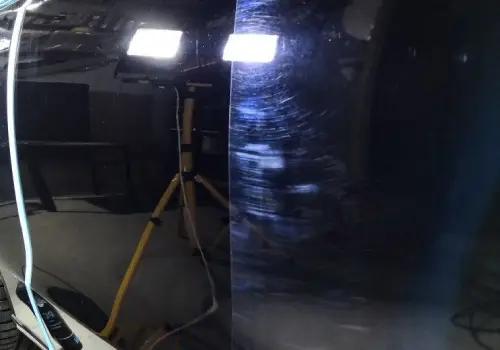
It is easy to assume new paint is perfect. Under bright inspection lights, it is not always as flawless as it looks on the lot. A new car has been shipped, stored and usually washed more than once before you collect it, and that can leave its mark:
- Fine swirls and wash marring from lot washes, most visible on dark colours.
- Bonded contamination such as iron particles and industrial fallout picked up in transport and storage. You can feel it as roughness on paint that looks clean. Our clay bar guide explains the plastic bag test.
- Small chips or scratches from handling on the way to the dealership.
None of this matters much if you are leaving the paint as it is. It matters a lot if you are protecting it, because a ceramic coating locks in whatever is underneath it and paint protection film sits on top of it. That is why a proper new car job starts with a wash, chemical and clay decontamination, and machine polishing where the paint needs it, before anything is applied. Our guide to what polishing can and cannot fix explains how far that goes.
Ceramic coating, PPF or both on a new car?
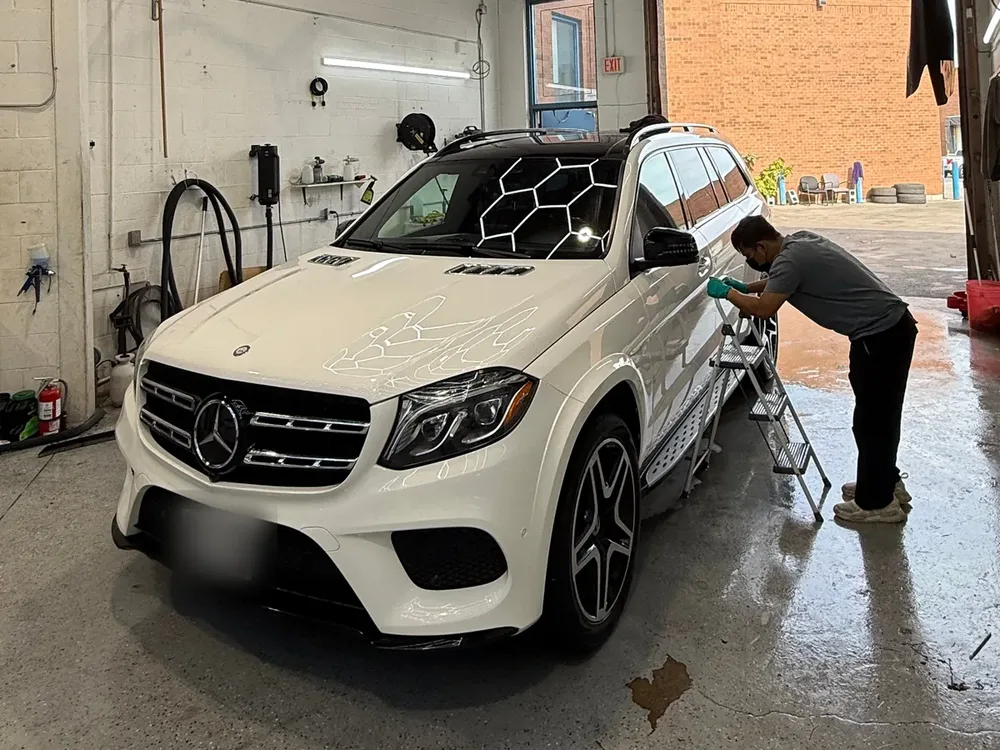
Ceramic coating is a liquid layer that bonds to the clear coat. It adds gloss, resists UV fade, chemical etching and water spots, and makes dirt and salt rinse off far more easily. It is not thick enough to stop stone chips. Our packages start at 3 years, and the right one depends on how long you plan to keep the car and how it will be washed. See how long ceramic coating lasts in Ontario.
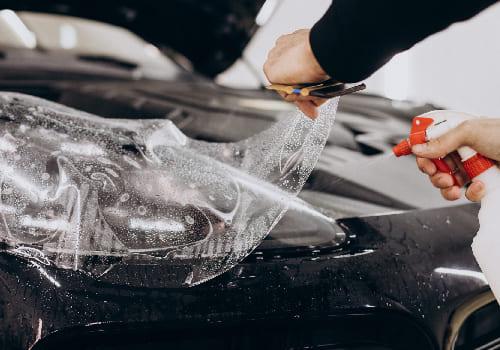
Paint protection film (PPF) is a clear urethane film that absorbs impacts from stone chips and road debris, and light scratches in its top coat heal with heat. Coverage ranges from a partial front, which covers the bumper and the leading edge of the hood and fenders, to a full front that adds the whole hood, fenders, mirrors and headlights, up to full body. See is PPF worth it in Ontario and how long PPF lasts.
Both together suits many new cars: film on the front end where the chips happen, and a coating over the whole car, film included, for gloss and easy washing. Our PPF vs ceramic coating comparison goes into more detail.
When to do it
- As soon as you can after delivery. The fewer kilometres on the paint, the less preparation it needs. Film protects the paint under it, but it does not repair chips that are already there.
- Before the first winter if you can. Salt, slush and grit are hardest on unprotected paint. A coating can still go on in winter if it is applied indoors, and our guide to ceramic coating in winter explains what the cold changes.
- Ask the dealer for a gentle hand wash, or no wash at all, before handover if you are booking a coating or film. A brush wash on the way out can add swirls that then have to be polished out.
What to check when you pick up the car
- Look at the paint in daylight or under bright lights, not just in the showroom.
- Check the bumper, hood edge, door edges and roof for chips or scratches, and point out anything you find before you sign the delivery paperwork.
- Read the bill of sale line by line and match any protection product against what you agreed.
- Keep the paperwork and warranty card for any product applied at the dealership.
Do not forget the glass and the floor
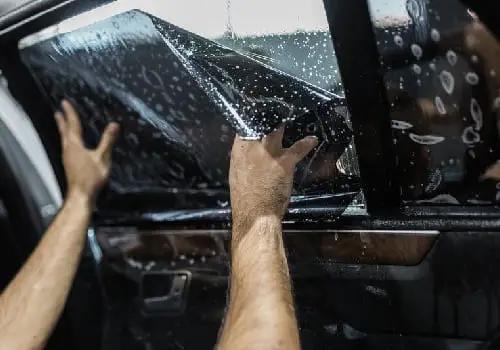
New car owners often have a few other jobs done in the same visit: window tinting (from $150 for Nano-Ceramic film, before HST), custom-fit floor mats before the first salty boots, and a coating on the wheels and glass so brake dust and rain clear more easily. Check Ontario's tint rules before choosing a shade for the front doors.
New car protection at Cosmo Car Customs
Bring the car to our studio on Atlantic Drive in Mississauga, ideally soon after delivery. We inspect the paint under the studio lights, show you anything we find, and confirm the price before any work starts. Every job begins with a wash and full decontamination, then polishing where the paint needs it. We are a Kenzo certified IGL installer and also apply System X, Gtechniq and Gyeon coatings, and we install SunTek paint protection film as an authorised dealer, cut for your exact make and model. Most coatings need the car for one to two days, and front-end film usually takes one to two days as well. See our ceramic coating service, our PPF service or get a quote.