Some version of "is film worth it?" comes up at the studio every week, usually from someone showing us a phone photo of a chipped hood. The honest answer depends on how you drive, how long you keep the car and what its paint would cost to fix. Here is how we explain it, including when we tell people to spend their money on something else.
The short answer
- Worth it: daily highway driving on the 401, 403, 407 or QEW, a new or nearly new car you plan to keep, dark or premium paint such as matte, tri-coat or deep metallic, or a lease you want to hand back without chip charges.
- Probably not worth it: an older car that is already chipped and will not be repainted, a car that rarely leaves city streets, or a car you are selling in a few months.
- What most of our customers choose: film on the front end, where most of the hits land, and a ceramic coating on everything, including the film.
Where stone chips actually come from
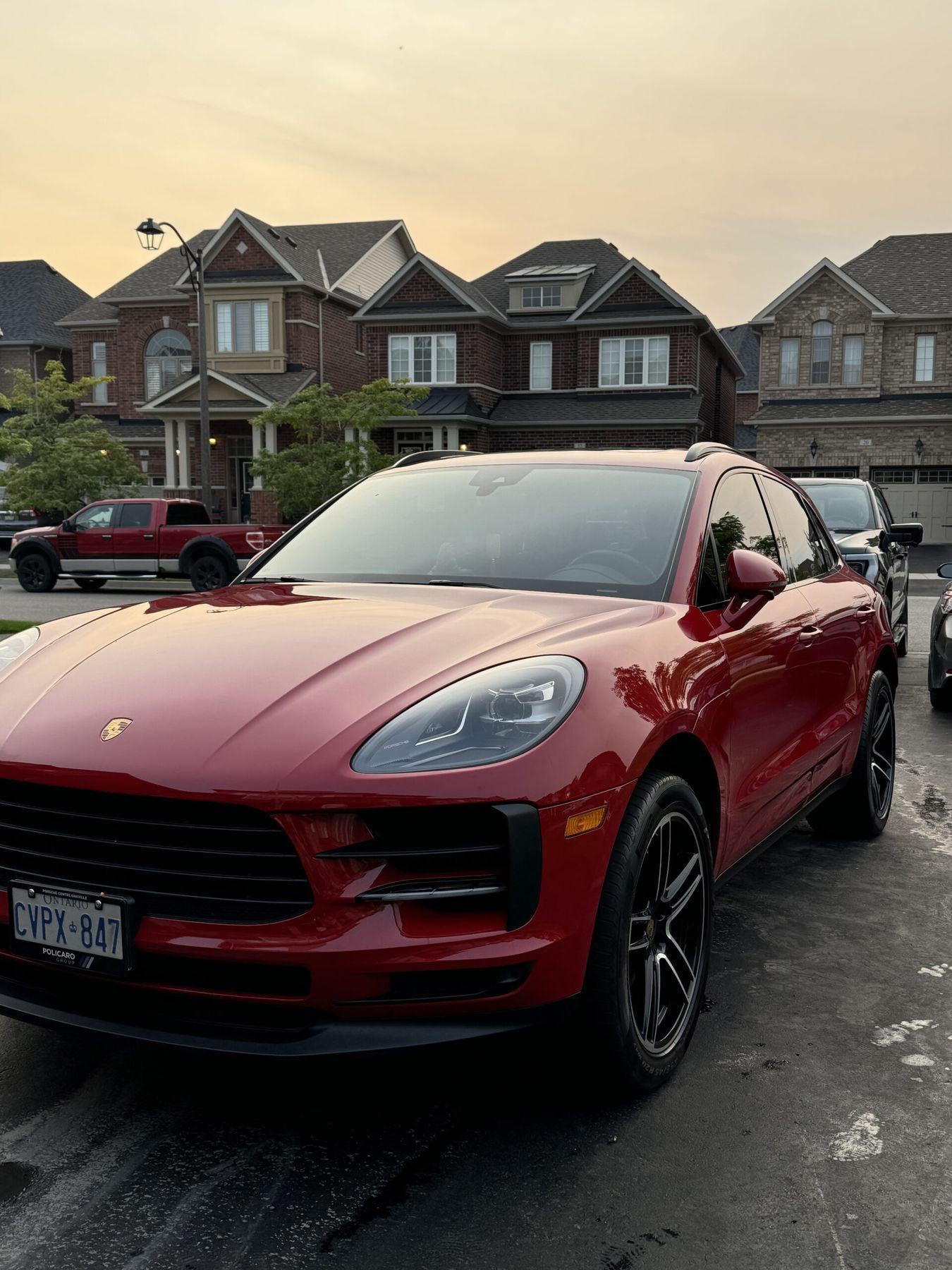
Chips are a speed and distance problem. At highway speed, every truck and car ahead of you throws up grit, and the parts of your car that face forward take the impacts: the front bumper, the leading edge of the hood, the headlights, the mirror caps and the front of the fenders. Behind the front wheels, the lower doors and rocker panels get sandblasted by your own tires.
Ontario winters make it worse in two ways. Winter roads carry sand, grit and loose gravel, so there is simply more material being thrown around, and salty water gets into any chip that goes down to the metal. A chip the size of a pinhead in November can be a bubbling rust spot by April. Our road salt checklist covers the rest of the winter damage.
What paint protection film does, and what it does not
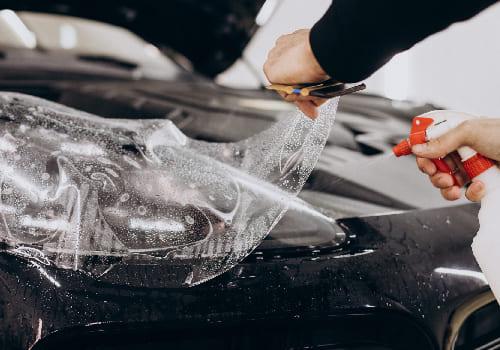
Paint protection film is a clear urethane layer bonded over the paint. It absorbs the small, constant impacts that would otherwise chip the paint, and its top coat heals light swirls and scratches with heat from the sun or warm water. The film we install, SunTek, is precision cut for your exact make, model and year from a pattern library, so the edges are clean and there is little or no blade work on your paint.
What it will not do matters just as much:
- It does not repair chips that are already there. Existing damage is touched up or corrected first, then sealed under the film.
- It is not armour against everything. A large rock at highway speed can still mark or tear the film. The paint underneath is usually saved, and a damaged panel of film can be replaced on its own.
- It is not a gloss treatment by itself. That is the job of a ceramic coating, and the two work well together. Our PPF vs ceramic coating guide explains the difference.
Which coverage to choose
We offer four levels of paint protection film in Mississauga, and the right one depends mostly on your driving:
- Bronze: partial hood and partial fenders. The minimum for the leading edges.
- Silver: bumper, partial hood, partial fenders and mirrors. The bumper usually takes the most chips, so this is where real highway protection starts.
- Silver+: bumper, full hood, partial fenders and mirrors. Covering the whole hood removes the film edge that a partial hood leaves across the panel, which is easier to spot on dark paint.
- Platinum: the full car, bumper to bumper. For new cars kept for years, premium or matte paint, and owners who want every panel protected from chips, scuffs and door dings.
If most of your driving is highway, full front coverage is the sensible minimum. On trucks, SUVs and cars with wide wheels, ask us about the lower doors and rocker panels too, where the tires throw grit at the paint.
What sets the price
Film pricing comes down to three things: how much of the car is covered, the size and shape of the panels, and how much preparation the paint needs first. A small hatchback bumper is a very different job from a full-size truck hood with deep contours, which is why we quote after seeing the car and confirm the price before any work starts.
The fair way to judge the value is against the alternative. Repainting a chipped hood and bumper properly, blended into the fenders so the colour matches, is a real body shop bill, and it replaces factory paint with a respray that buyers and appraisers notice. Film keeps the original paint original.
Is PPF worth it on a leased car?
Often, yes. Lease return inspections look closely at the front end, and heavy chipping on the bumper and hood can lead to charges. Check your lease agreement for its wear and tear standard, and ask the leasing company whether film can stay on at return.
When to install it
The best time is before the damage happens: on a new car in its first few weeks, or on any car before the winter roads start. We install indoors in our Mississauga studio, so the weather does not stop the job, but fresh film needs a few days to settle, and it is easier to leave it alone before the first snow than after. Front-end coverage usually takes one to two days. Full-body installs take longer, and we confirm the time for your car when you book.
Looking after the film
- Leave it alone for the first few days while it settles. Small water pockets under fresh film clear on their own as it cures.
- Wash by hand, and keep pressure washer nozzles away from the film edges.
- Rinse the salt off every couple of weeks in winter, just as you would with bare paint.
- A ceramic coating on top makes the film easier to clean and adds gloss.
SunTek backs its film with a manufacturer warranty against yellowing, cracking, bubbling and delamination, which we register at install. Ask us for the exact term on the film chosen for your car.
Our honest recommendation
If you drive the highway every day and plan to keep the car, film on the front end is the only thing that stops the chips from happening in the first place, and it keeps the paint original for resale. If your car is older, already chipped and mostly driven in town, a thorough detail and a coating are better value. Book a free inspection at our Mississauga studio and we will show you where your car is taking hits and which coverage makes sense.
Sources
- SunTek paint protection film product information
- Ontario winter driving guidance on road conditions through the season
- Our guides to PPF vs ceramic coating and how long ceramic coating lasts