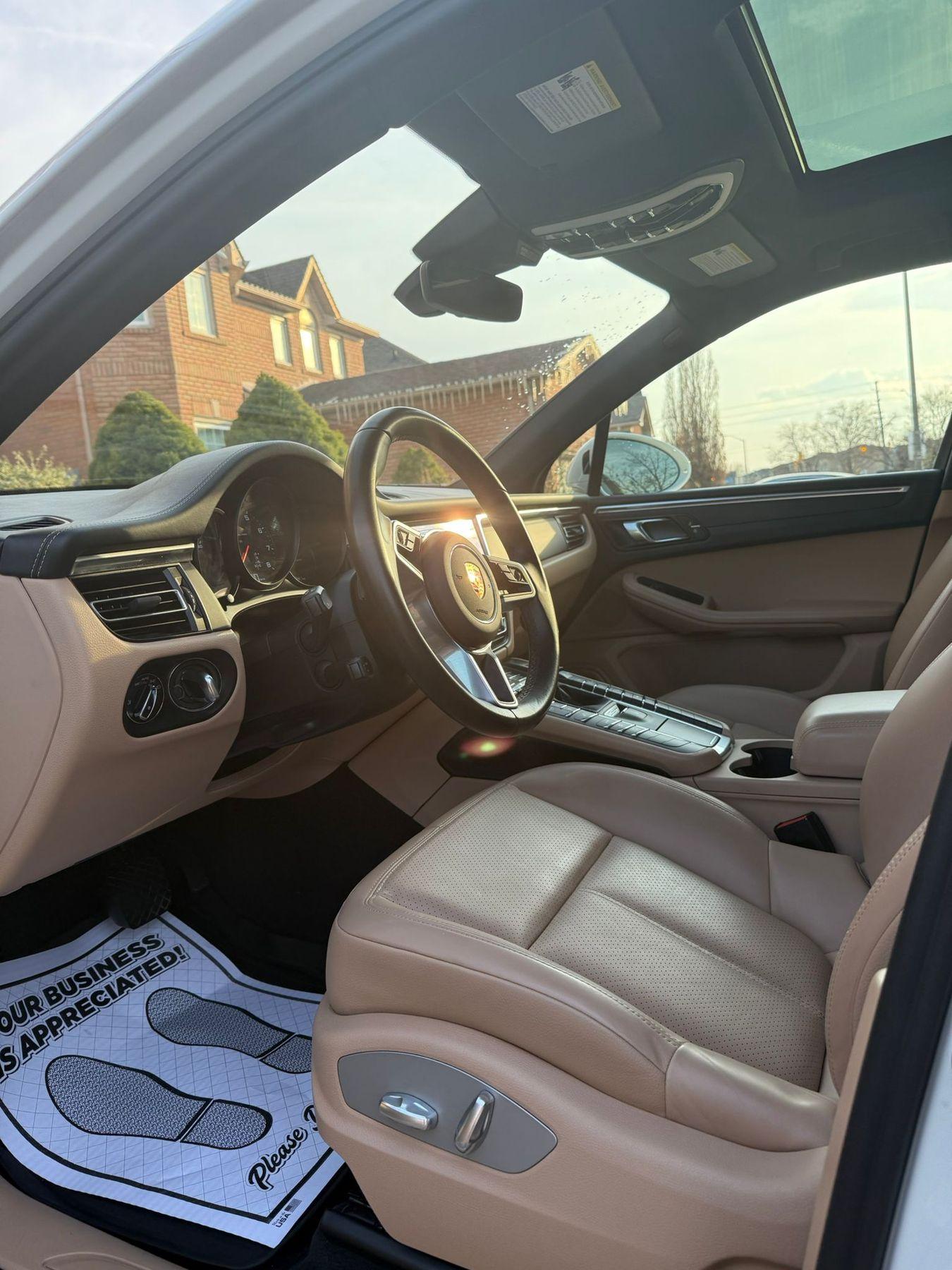
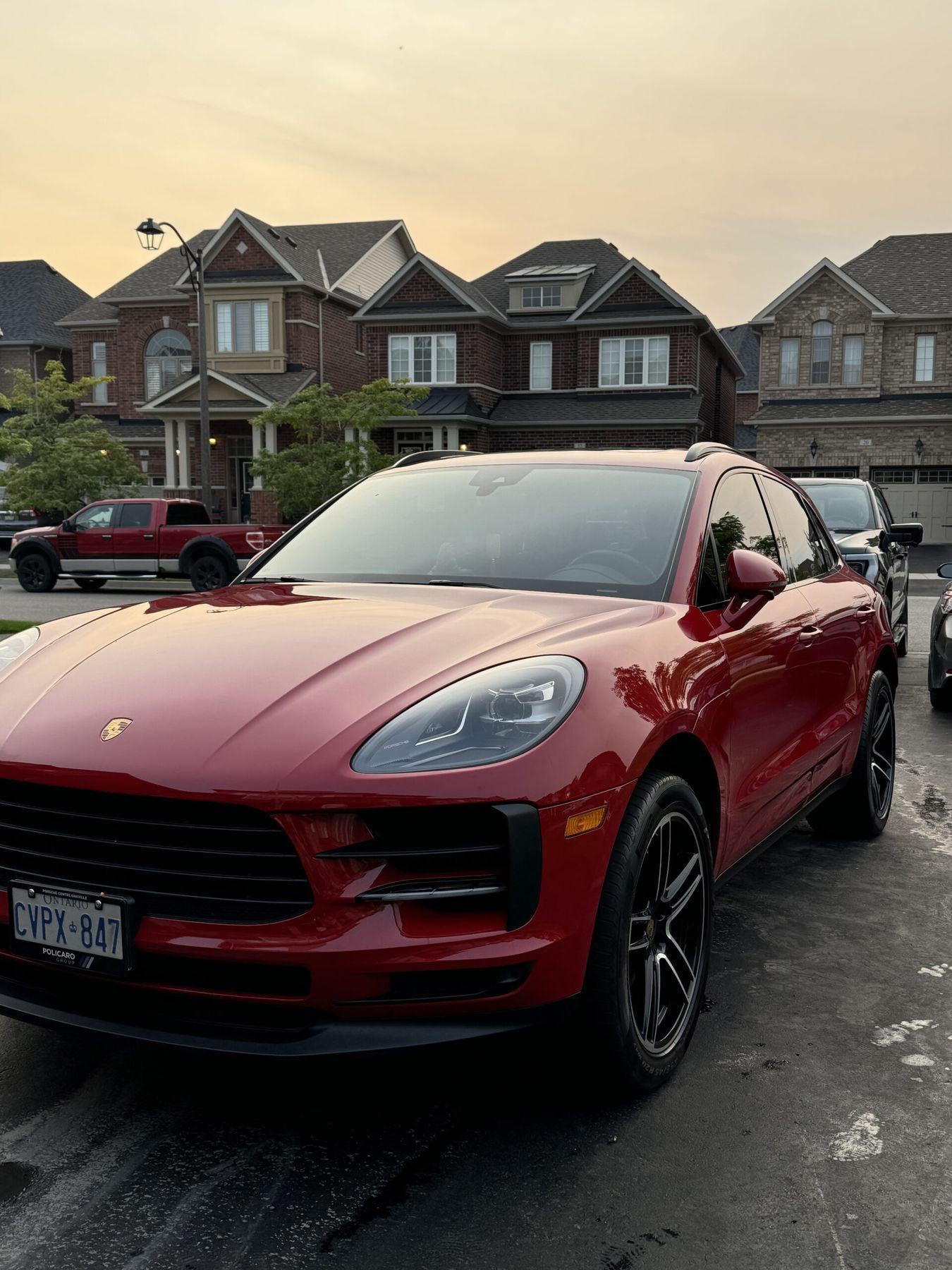
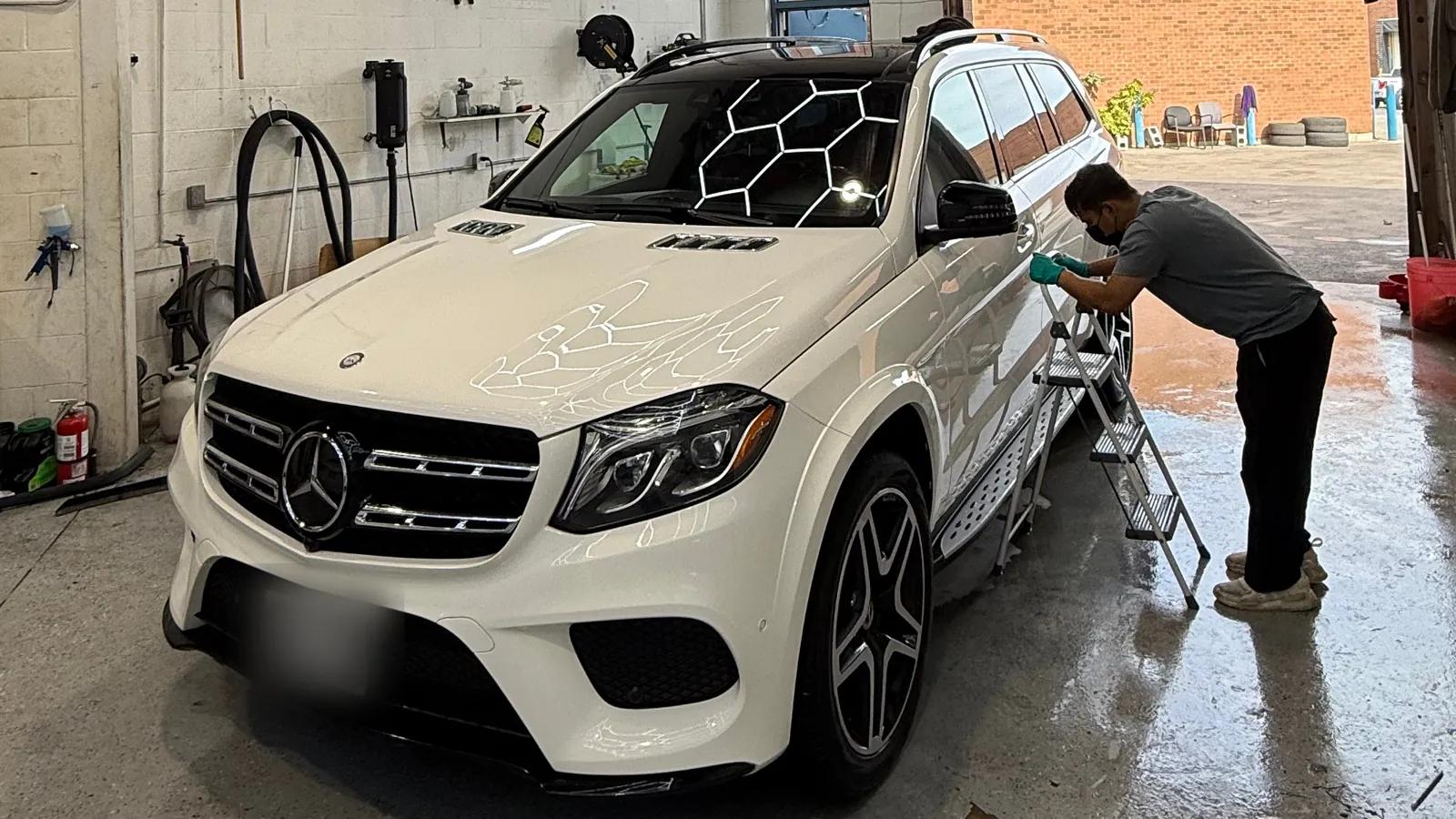
Every October the same question comes up at our Mississauga studio: is it worth waxing the car before winter? Yes, with one catch most people never hear: a wax will not last until spring. Here is what a fall wax actually does, how long it lasts on Ontario roads, how cold is too cold to apply it, and when you should choose something stronger.
The short answer
- Should you wax before winter? Yes. Protected paint lets salt, slush and road film rinse off instead of bonding.
- When: October or early November, on paint that has been washed and decontaminated first.
- How long it lasts: about 4 to 8 weeks for a carnauba wax in Ontario, so it covers the start of winter, not the whole season.
- For the whole winter: a synthetic sealant lasts 3 to 6 months, and a ceramic coating lasts years.
What a fall wax actually does
Wax is a thin, sacrificial layer that sits on top of the clear coat. Water beads on it instead of spreading across the paint, and salt brine, slush and road grime have less to grip, so more of it comes off with a rinse. That makes every winter wash quicker and gentler, because you are rinsing dirt away rather than scrubbing it off. It also adds gloss and depth, which is the part you see.
What wax does not do matters just as much in Ontario:
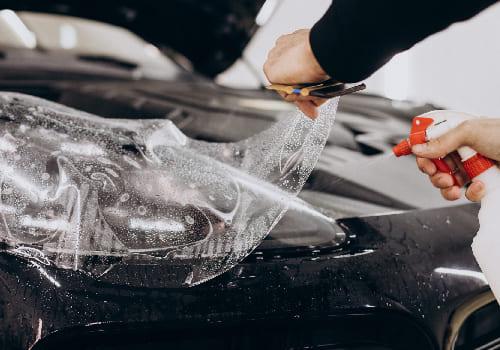
- It does not stop stone chips. Only paint protection film does that, and salt turns chips into rust. Our guide on whether PPF is worth it explains why.
- It does not neutralise salt. Salt still has to be rinsed off every couple of weeks, wax or no wax.
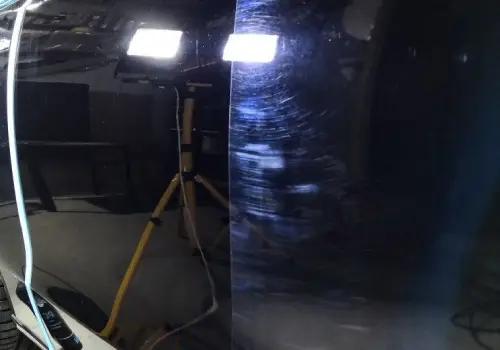
- It does not fix the paint. Swirls and scratches stay under the wax. Removing them is paint correction.
How long wax lasts in an Ontario winter
These are the same numbers we use in our ceramic coating lifespan guide:
- Carnauba wax: 4 to 8 weeks.
- Synthetic paint sealant: 3 to 6 months. A good sealant applied in October is usually gone by spring.
- Professional ceramic coating: 3, 6 or 10 years, depending on the package, with proper washing.
Winter is hard on wax. Salt brine, sand and repeated washing wear it down, and the strong cleaners many touchless car washes rely on, because they never touch the car, wear it down faster than a pH-neutral hand wash. A touchless wash is still far kinder to the paint than a brush wash, but if you use one all winter, expect a wax applied in October to be mostly gone by December.
How cold is too cold to wax a car?
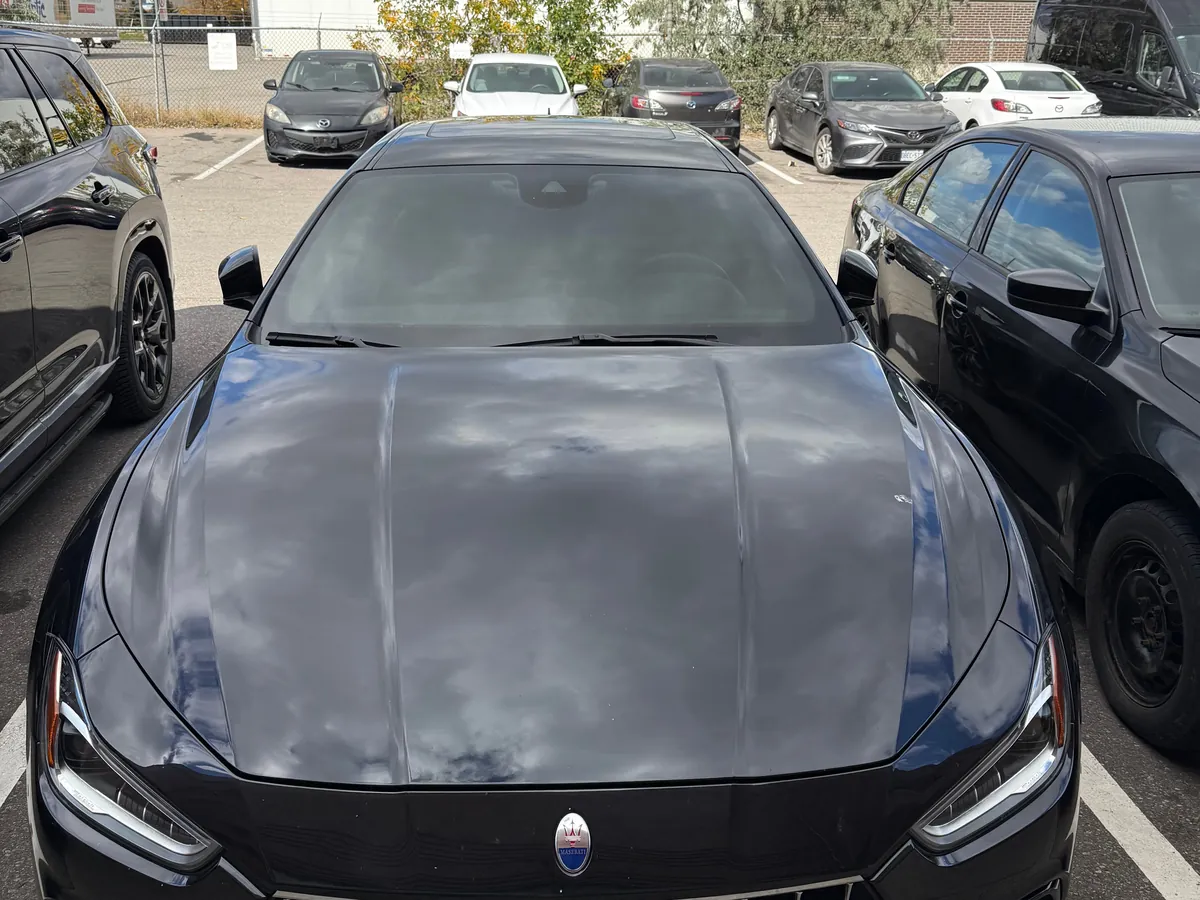
Temperature matters more than most people think. Chemical Guys, one of the brands we use, says most waxes are made to perform in a sweet spot of about 50°F to 85°F, roughly 10°C to 29°C. Below that, wax turns stiff and is hard to spread thinly and evenly, it does not bond to the paint properly, and it streaks and smears when you try to buff it off. A poorly bonded wax can look fine on the day and be gone after the first wash.
Three things catch people out in the fall:
- The panel is colder than the air. A car that sat outside on a 4°C night can still be cold to the touch at noon on a 12°C day.
- Hidden water. Water trapped behind mirrors, badges and trim runs out onto freshly waxed panels and leaves streaks, and in cold weather it does not evaporate.
- Short, damp days. Wax needs time to haze before it is buffed off, and it needs longer when it is cool.
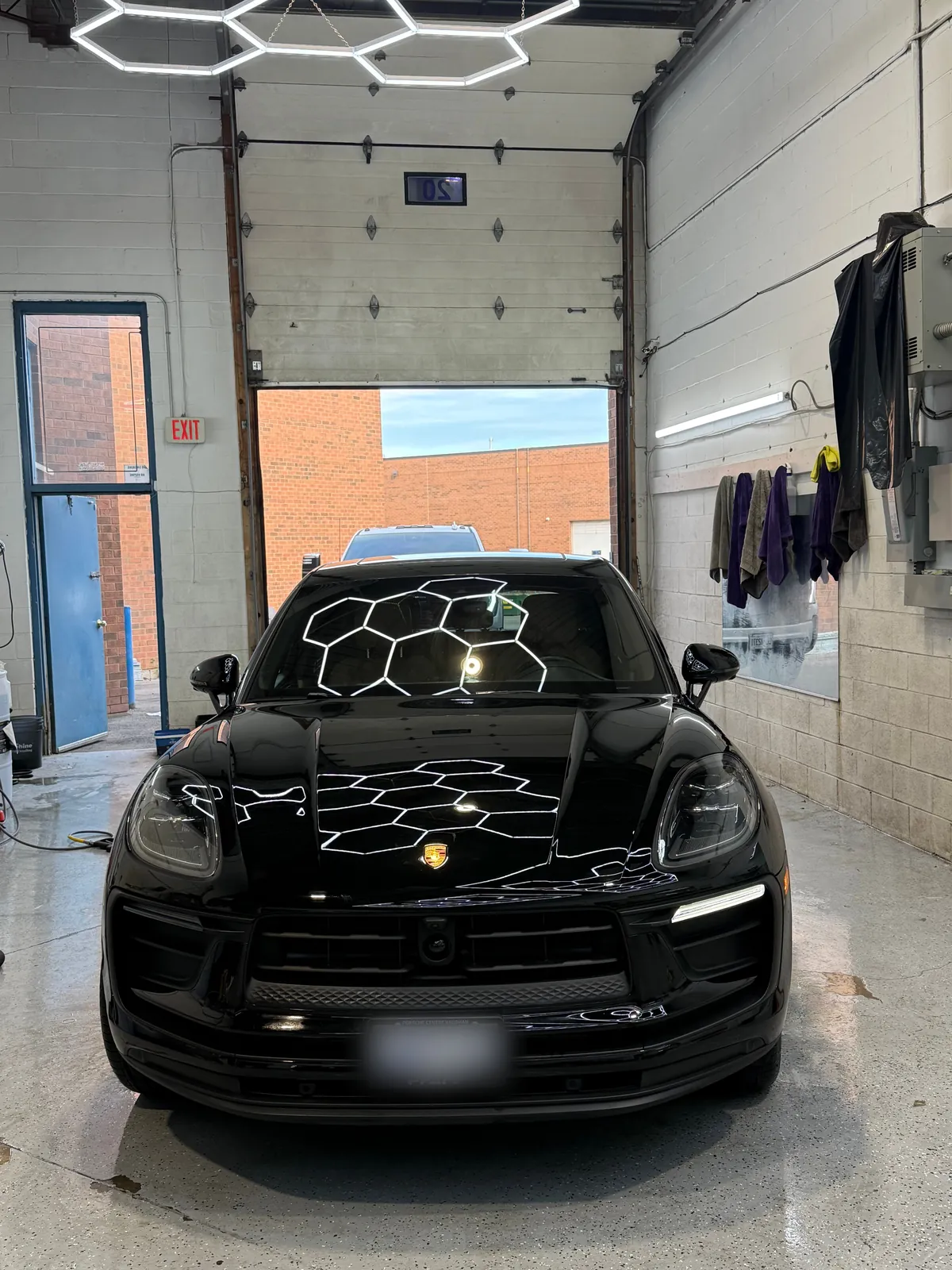
That is why we wax indoors, out of the cold, wind and rain, with the car fully dried first, including the mirrors, badges and door jambs. If you are doing it yourself, pick a dry day above 10°C, work in the shade or a garage, and follow the cure time on the label, allowing extra time when it is cool.
How we wax a car before winter
- Wash: a pH-neutral wash, including the wheel wells and the bottoms of the doors.
- Decontaminate: bonded iron and road film are lifted off the paint, so the wax bonds to the clear coat and not to the dirt sitting on it.
- Dry completely: every panel, seam, mirror and door jamb, so no water runs out later.
- Apply thinly: one panel at a time. A thin coat bonds better and buffs off cleaner than a thick one.
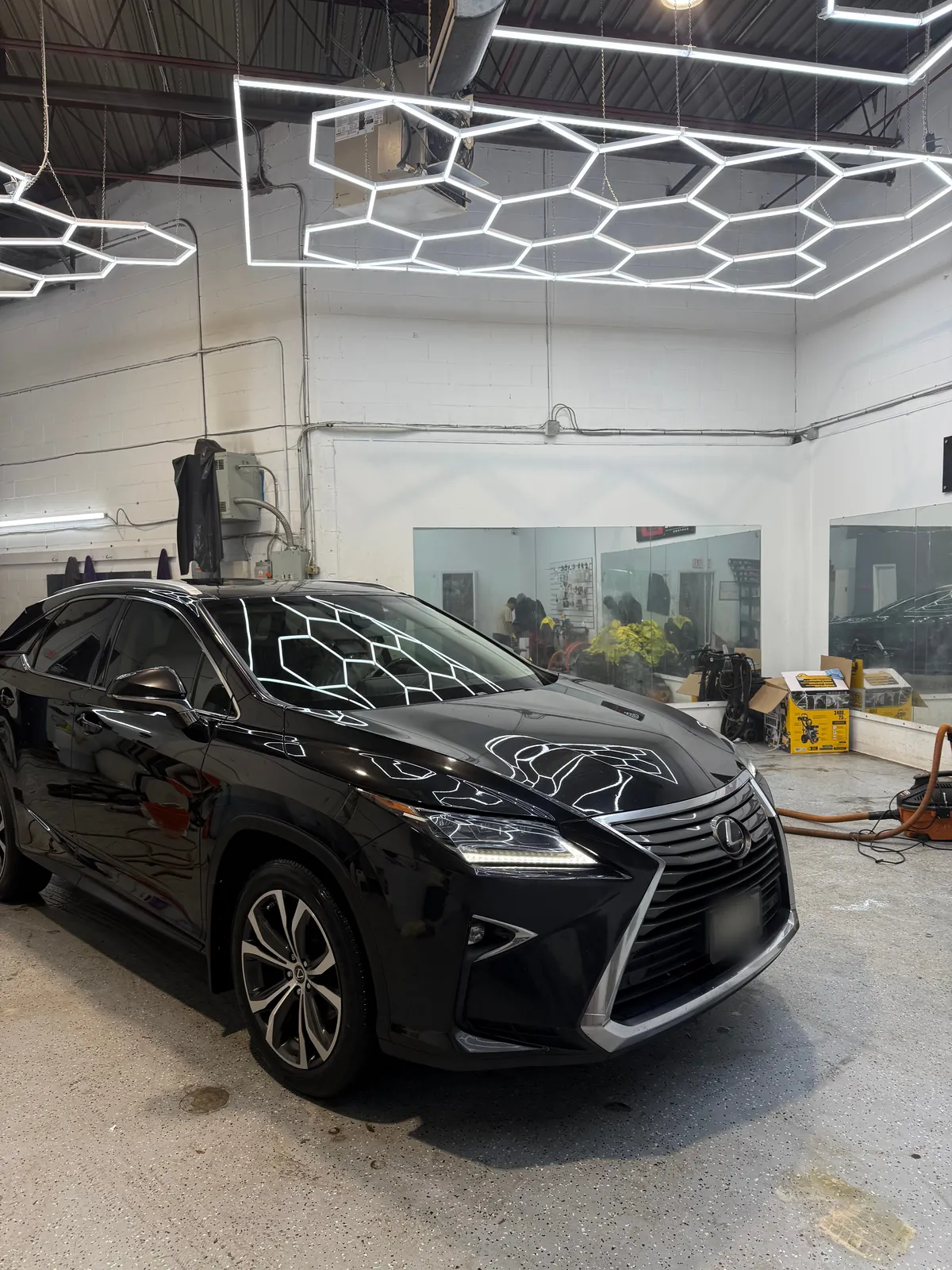
- Buff and inspect: each panel is buffed with a clean microfibre towel and checked under the studio lights for high spots and streaks.
If the car lives outside all winter, ask about a sealant instead. It lasts months rather than weeks, so one application covers most of the salt season.
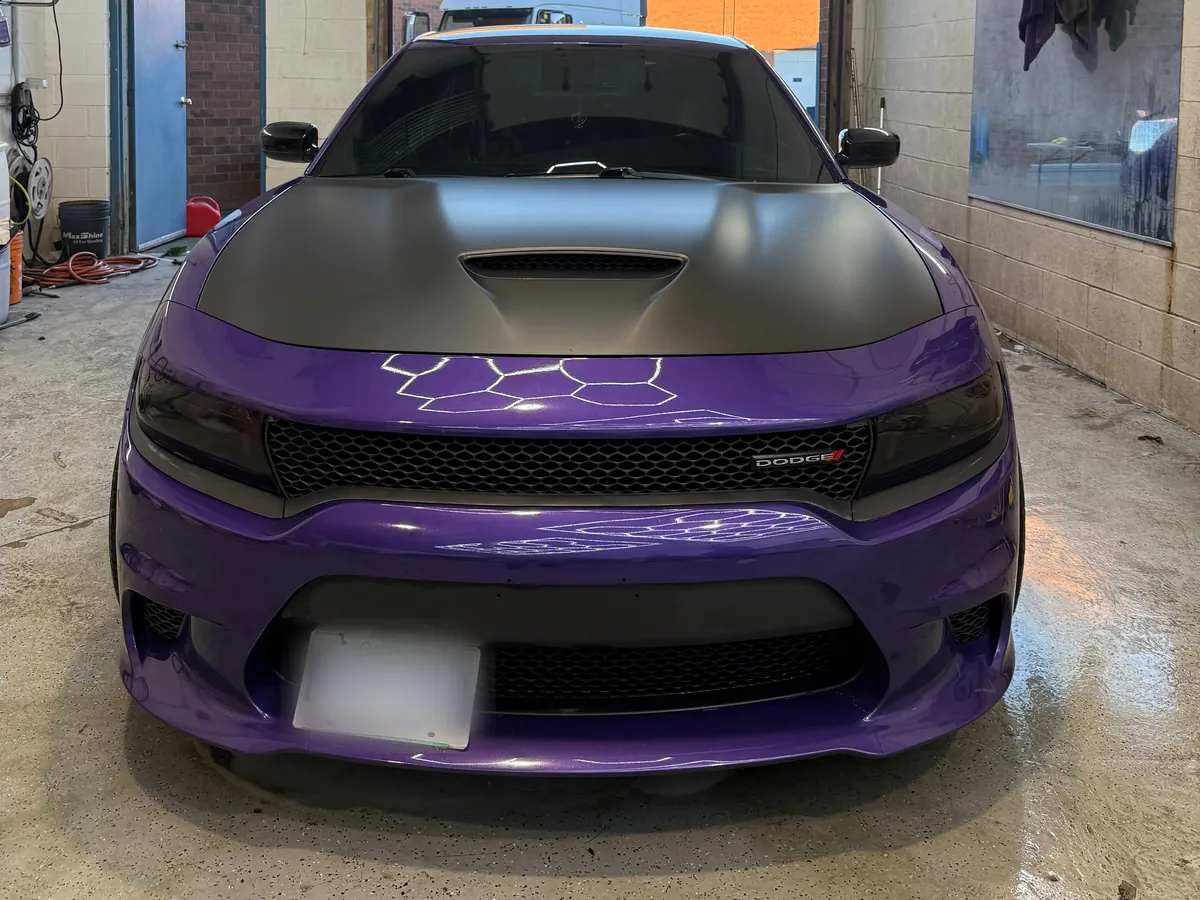
Do not wax matte paint, wraps or textured trim
Matte and satin paint, matte wraps and satin paint protection film should never get a regular wax. Wax fills the fine texture that makes a matte finish matte, and leaves shiny, blotchy patches that are hard to remove. Avery Dennison, one of the largest wrap film makers, warns that even waterless washes that contain wax leave glossy spots on matte wraps. Matte surfaces need matte-specific products, so tell us when you book if any panel on your car is matte or wrapped. The same goes for unpainted, textured black plastic trim, where wax dries to a white residue.
Wax, sealant or ceramic coating for winter?
- Wax: the warmest gloss and the lowest cost, but it lasts weeks, so plan to re-wax mid-winter. Best for a car that is garaged or driven little in winter.
- Sealant: the practical choice for one winter on a daily driver. Applied in October, it carries most cars through the worst of the salt and is usually gone by spring.
- Ceramic coating: the choice if you are keeping the car. It lasts years, salt and slush release with a rinse, and it replaces the yearly wax. See our ceramic coating packages.
How to tell when the wax has gone
- Water spreads into flat sheets or sits in puddles instead of beading.
- A white salt film stays on the paint after a rinse.
- The paint feels grabby, not slick, under a clean microfibre towel.
Check after every couple of washes. If the protection is gone by January, a mid-winter wax indoors, or a switch to sealant, gets you to spring. Our road salt checklist and season-by-season detailing schedule cover the rest of the winter routine.
Book a pre-winter wax
A fall detail with wax or sealant is the most useful thing you can do for your paint before the salt trucks come out. We work indoors at our studio on Atlantic Drive in Mississauga, and every quote lists exactly what is included for your vehicle. See the detail packages and book.