"Paint correction" gets used for everything from a quick buff to a two-day restoration, so it is worth knowing what it actually means before you pay for it. Here is how it works on your car, what it can and cannot fix, and how we decide how far to take it at our Mississauga studio.
The short answer
- What it is: machine polishing that levels the clear coat until swirls and light scratches are gone, not filled.
- What it fixes: swirl marks, wash scratches, buffer trails from poor polishing, water spot etching, light oxidation and dull, hazy paint.
- What it cannot fix: stone chips, scratches that go through the clear coat into the colour, and clear coat that is already peeling.
- How long it takes: a one-stage polish is usually a full day; a two-stage correction takes one to two days.
- What comes after: protection. Corrected paint has none of its own, so a sealant or ceramic coating goes on straight after.
What paint correction actually does
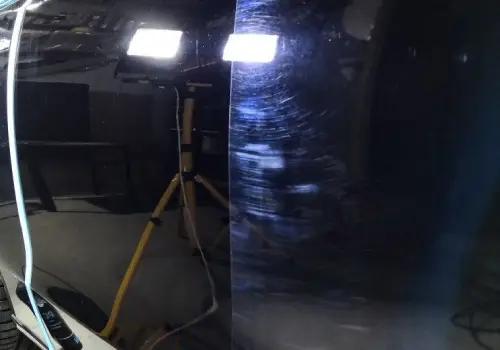
Car paint is built in layers: primer, the colour coat, and a clear coat on top that gives the gloss and carries the UV protection. Swirls and light scratches sit in that clear coat. In direct sun every tiny scratch scatters light in a different direction, which is why a swirled black car looks grey and cobwebbed in daylight even when it is clean.
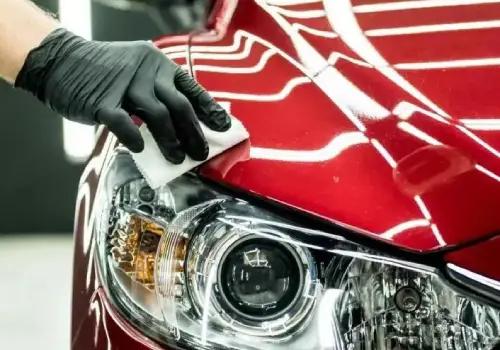
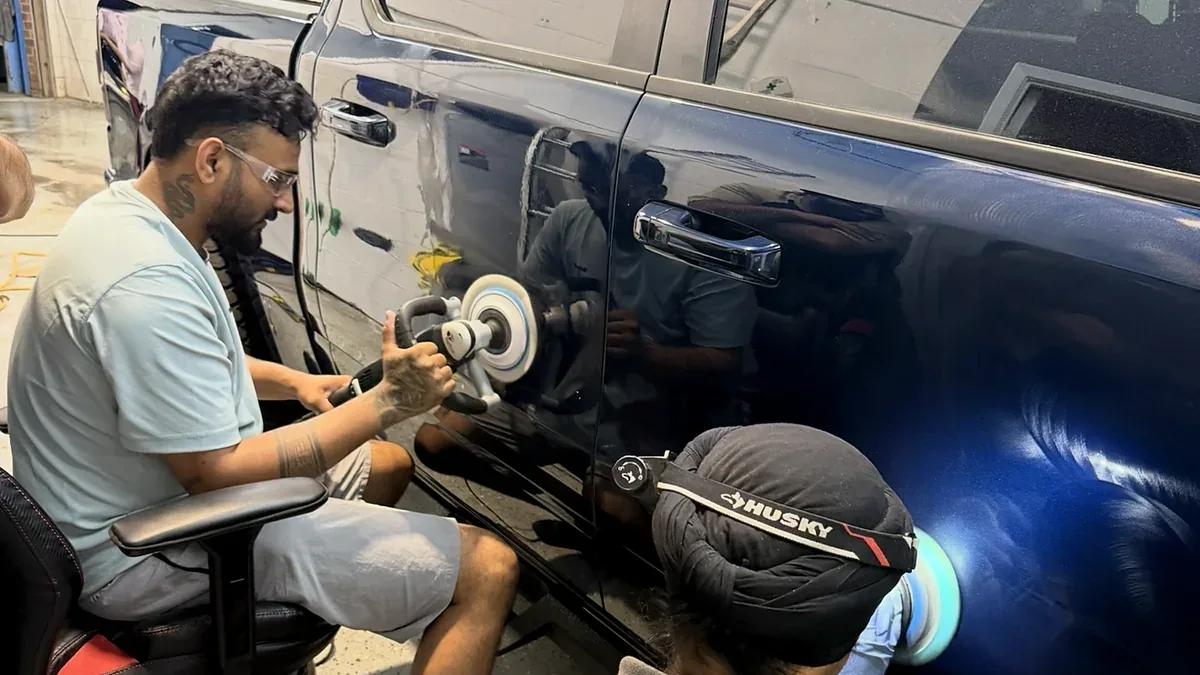
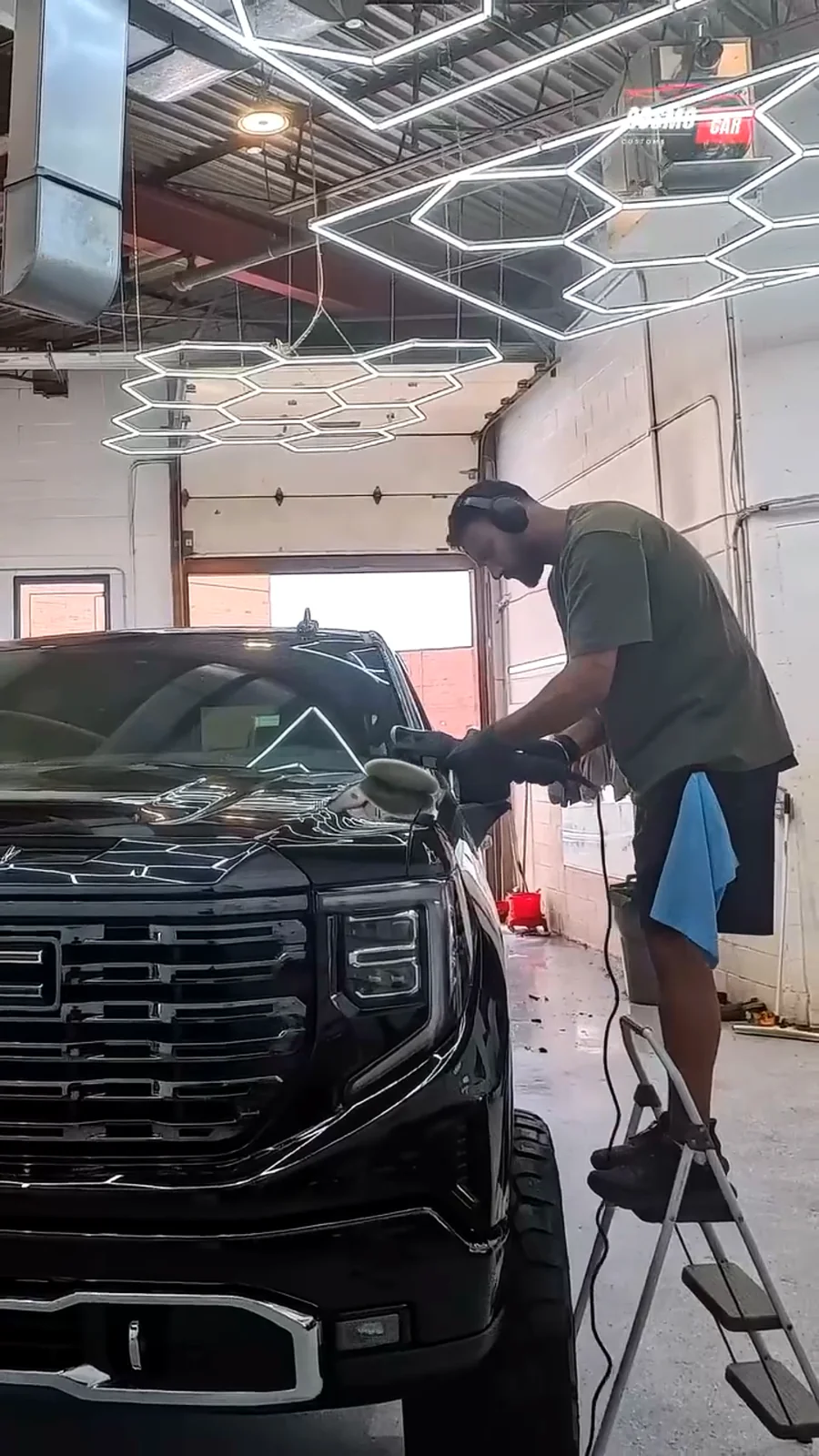
Correction uses a machine polisher, a pad and an abrasive compound to remove a very thin, even layer of clear coat until the surface is level with the bottom of the defects. Once the surface is flat again, light reflects cleanly and the depth comes back. That is the difference from a wax or glaze: those fill and hide fine scratches for a few weeks, while correction removes them.
The margins are small. DeFelsko, which makes the paint thickness gauges detailers use, puts most factory paint at about 100 to 180 microns in total, primer, colour and clear combined. That is roughly the thickness of one or two sheets of printer paper, and a roof can be as thin as about 75 microns. Only part of that is clear coat, which is why correction has to be measured, not guessed.
What it fixes, and what it cannot
Paint correction removes defects that sit in the clear coat:
- Swirl marks from automatic brush washes, dirty wash mitts and drying with the wrong towel.
- Light scratches and scuffs that have not broken through the clear coat.
- Holograms and buffer trails left by a previous, badly finished polish.
- Water spot etching from hard water left to dry on the paint.
- Light oxidation and the dull, chalky look of older or sun-faded paint.
It cannot fix stone chips, scratches deep enough to reach the colour, dents, or clear coat that is already peeling, which needs paint. A quick check for a scratch: run a fingernail across it. If your nail catches, the scratch is probably too deep to polish out completely. Correction can still soften how it looks, and we tell you at inspection which marks will stay. Chips need touch-up, and paint protection film is what stops new ones.
How paint correction works, step by step
A proper correction follows the same order every time:
- Wash and decontaminate. A thorough wash, then decontamination to lift bonded iron and road grime, so the polisher never drags dirt across the paint.
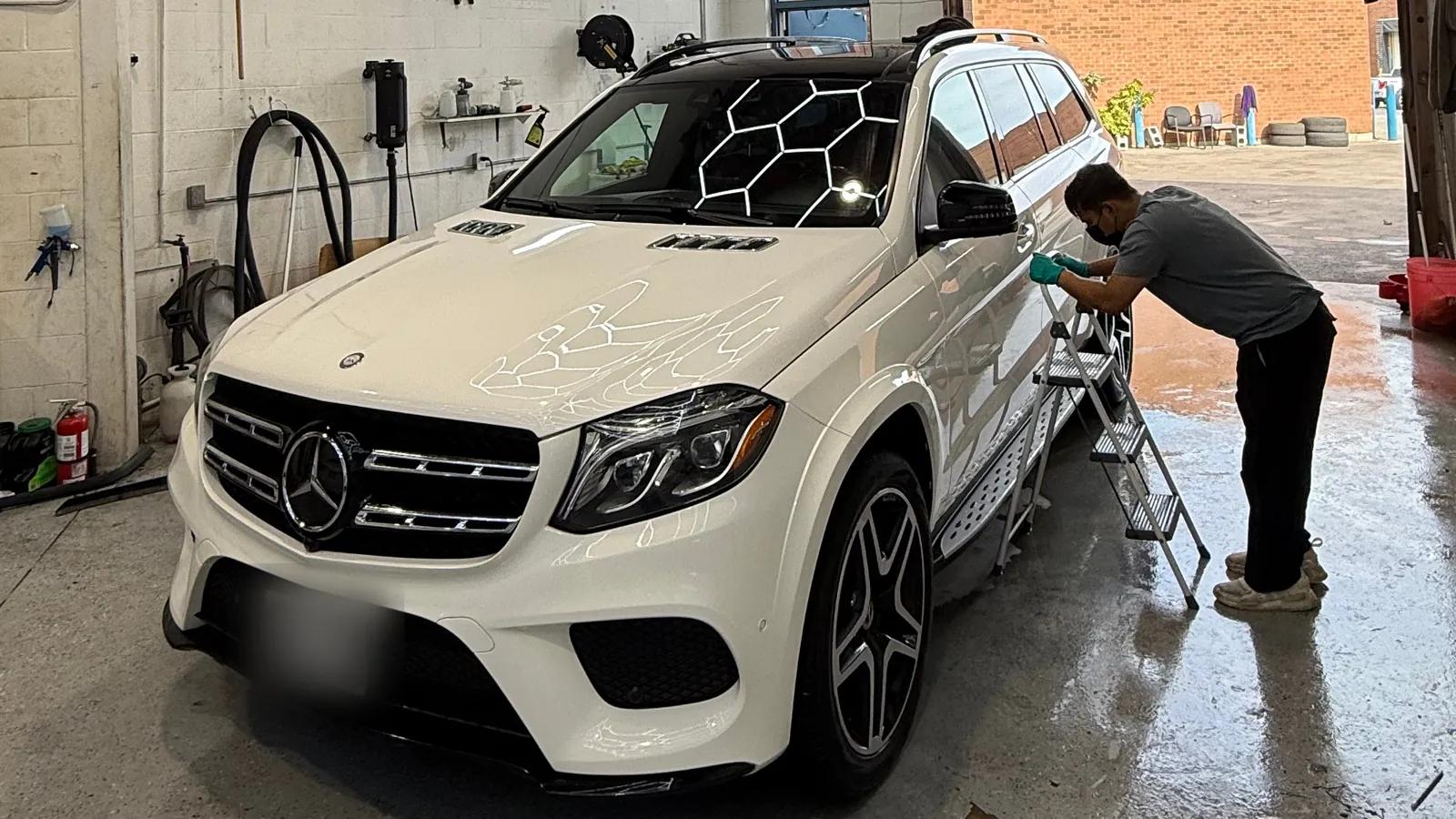
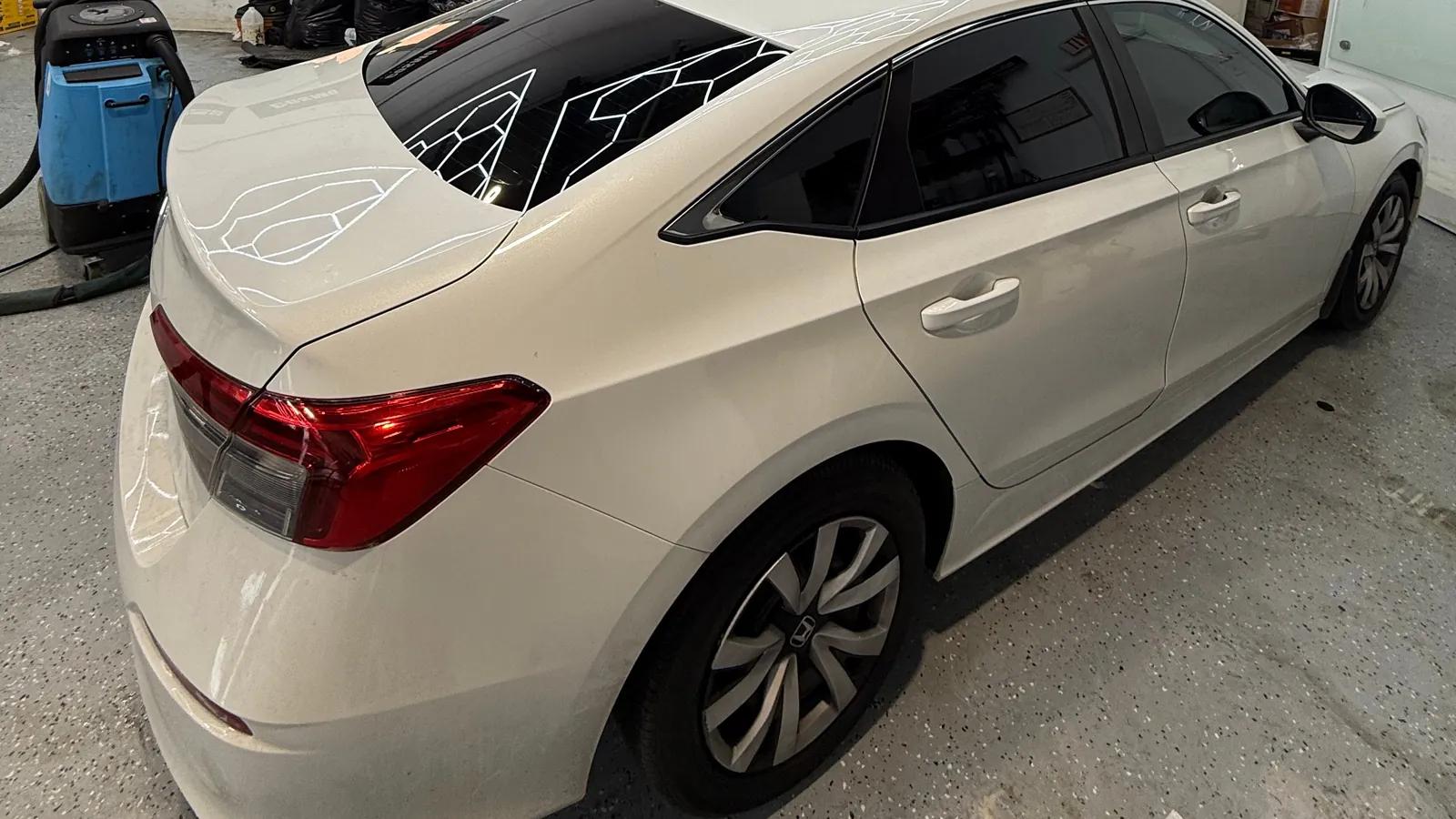
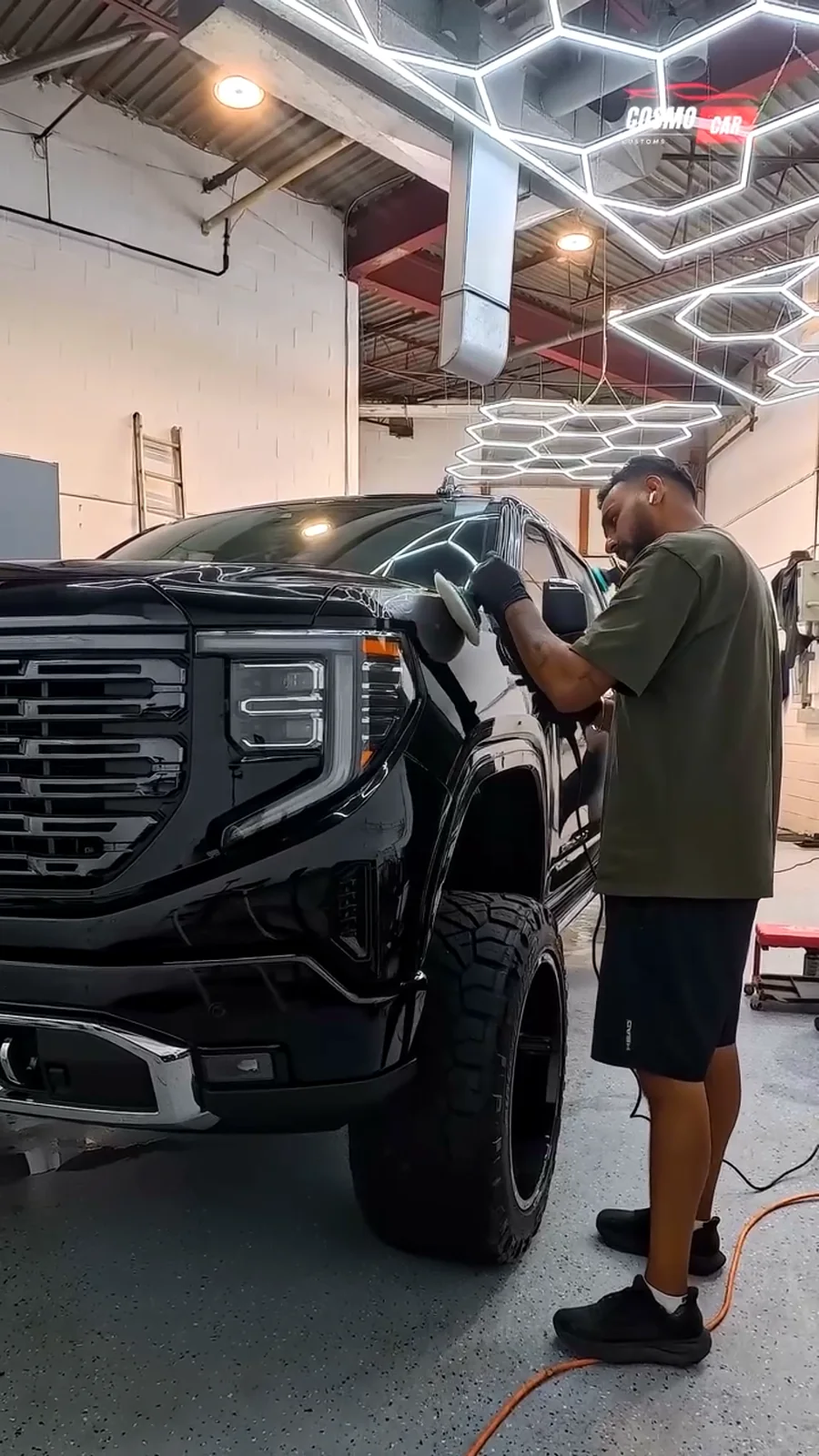
- Inspect under the lights. Swirls hide in ordinary light. Under the studio's inspection lights every defect shows, and we sort the ones in the clear coat from the ones that go deeper.
- Measure the paint. A paint depth gauge reading tells us how much there is to work with and flags thin or repainted panels before any polishing starts.
- Start gentle. The least aggressive pad and compound that could do the job is tested on a small area first, and only stepped up if it is not enough.
- Protect trim and edges. Rubber and plastic trim are masked, and panel edges get extra care, because paint is thinnest on the edges.
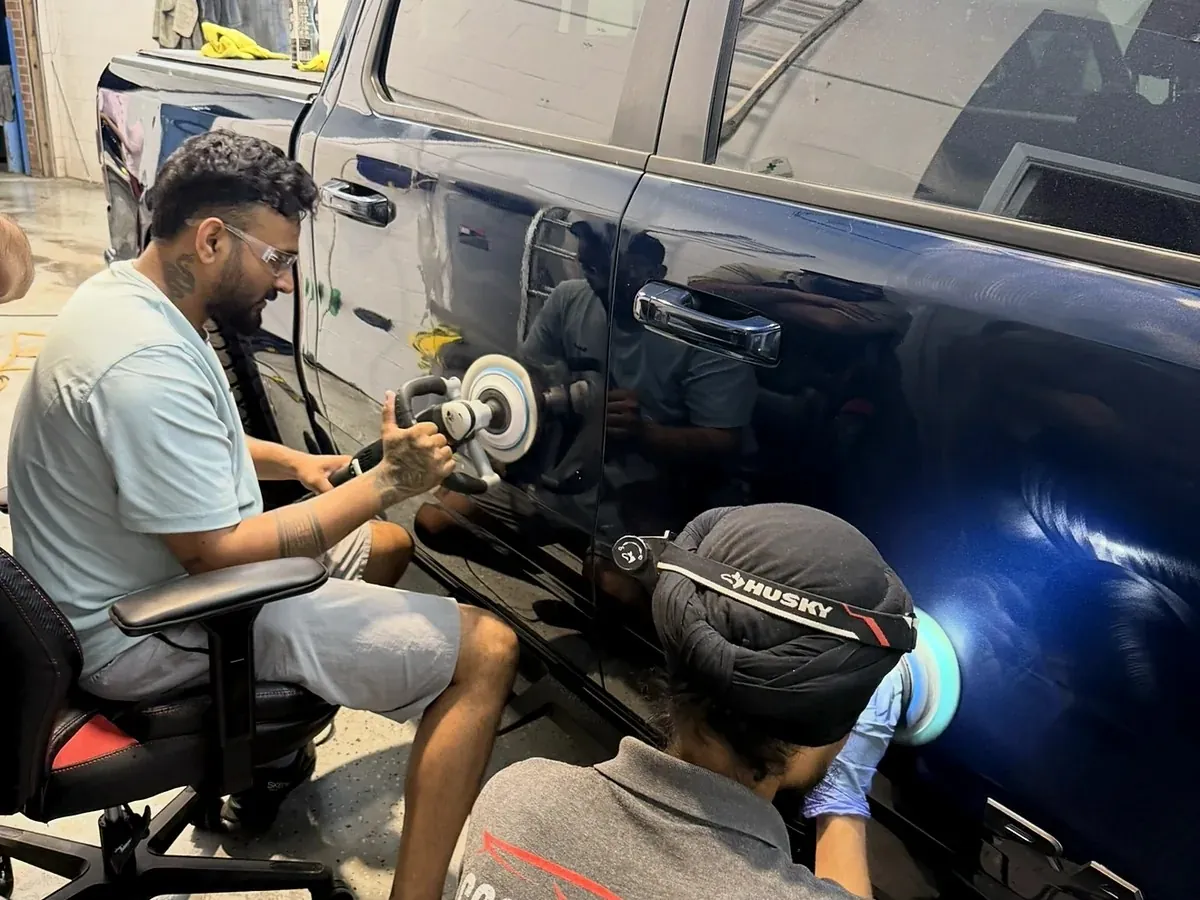
- Compound, then polish. A cutting stage removes the defects, then a finer polishing stage takes away the light haze the cut leaves and brings the gloss back.
- Check the real finish. Polishing oils can hide swirls for a while, so each panel is wiped clean and checked again under the lights.
- Protect. A sealant or ceramic coating goes on before the car leaves.
We use RUPES polishing machines with Koch-Chemie and Auto-Brite compounds and pads, matched to how hard or soft your car's clear coat is.
One-stage polish or two-stage correction?
- One-stage polish: a single polishing step that improves gloss and removes lighter defects. Right for newer or well-kept paint that is dull or lightly swirled. Usually a full day.
- Two-stage correction: a cutting step for heavier swirls, scratches, water spots and oxidation, then a refining step to restore clarity. For paint that needs more before it looks right again. One to two days.
More stages are not automatically better. Every pass removes clear coat, so the goal is the least correction that gets the result. We inspect the paint under the lights and recommend the stage your car actually needs.
Is paint correction safe for your clear coat?
When it is measured, yes. DeFelsko notes that most automakers recommend removing no more than about 8 microns of clear coat, so the UV blockers in it stay intact, and that manufacturers now specify measuring paint thickness before and after any sanding or buffing. That is why we check paint depth with a gauge before and during polishing, remove only what a defect needs, and sometimes recommend leaving a deep scratch alone rather than chasing it through the clear coat.
How long does paint correction last?
The defects it removes are gone for good. What brings swirls back is the same thing that caused them in the first place: brush car washes, dirty wash mitts and wiping a dusty car with a dry towel. Corrected paint also has no protection of its own, so how long it stays perfect comes down to two things:
- How it is washed. Hand wash with a clean mitt, rinse often, dry with a soft towel, and stay out of automatic brush washes.
- How it is protected. A wax or sealant buys weeks to months. A ceramic coating lasts years and makes every wash gentler. Our guide to how long ceramic coating lasts in Ontario has the numbers, and our pre-winter wax guide covers the short-term options.
Paint correction vs polishing, waxing and coating
- Polishing is the tool correction uses. On its own, "a polish" often means a light, one-step gloss boost rather than full defect removal.
- Waxing or glazing adds shine and hides fine swirls for a few weeks. It removes nothing.
- Ceramic coating protects the paint for years and makes it far easier to clean, but it seals in whatever is underneath, which is why correction comes first.
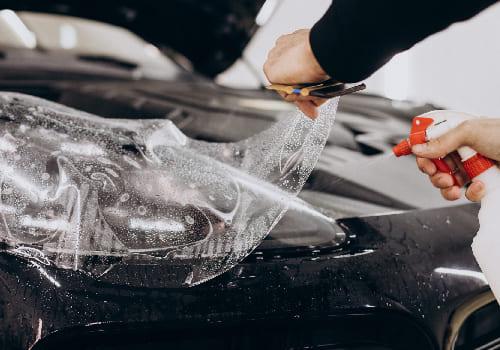
- Paint protection film is a physical layer that stops chips. Existing defects are corrected before the film goes on, so they are not sealed under it. Our PPF vs ceramic coating guide explains how the two work together.
When paint correction is worth it
- Before a ceramic coating or paint protection film, so you are not locking swirls in for years.
- On dark paint that looks grey and cobwebbed in the sun.
- On a used car you have just bought, to undo the previous owner's car washes.
- Before selling, when a deep, glossy finish makes the first impression.
What does paint correction cost?
Correction is quoted on condition, not from a fixed menu. The size of the vehicle, how badly the paint is swirled and whether it needs one stage or two set the price. At our Mississauga studio we inspect the paint first, show you the defects with a light, and confirm which stage it needs and what it will cost before any polishing starts. Book a free paint inspection.