
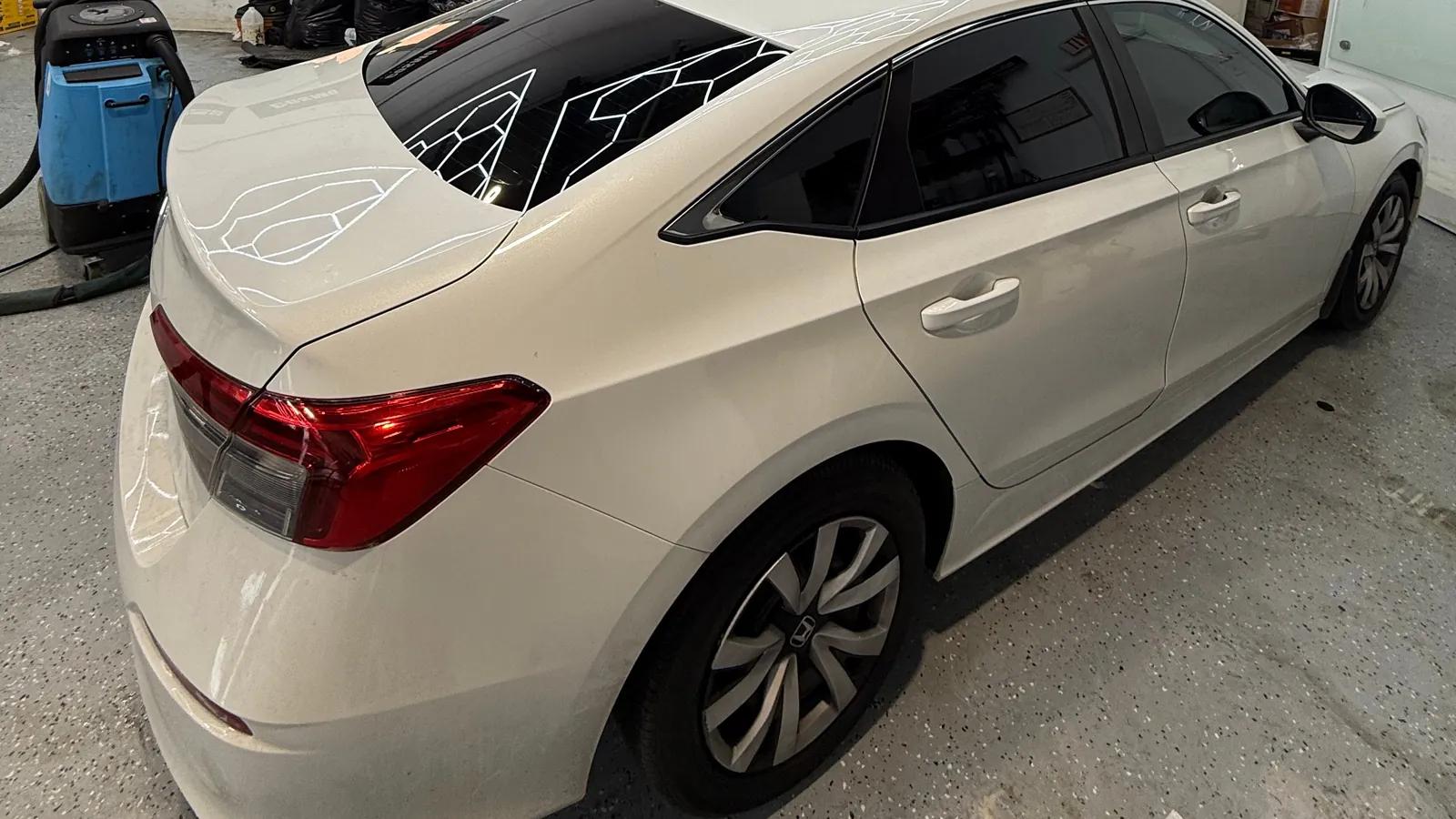
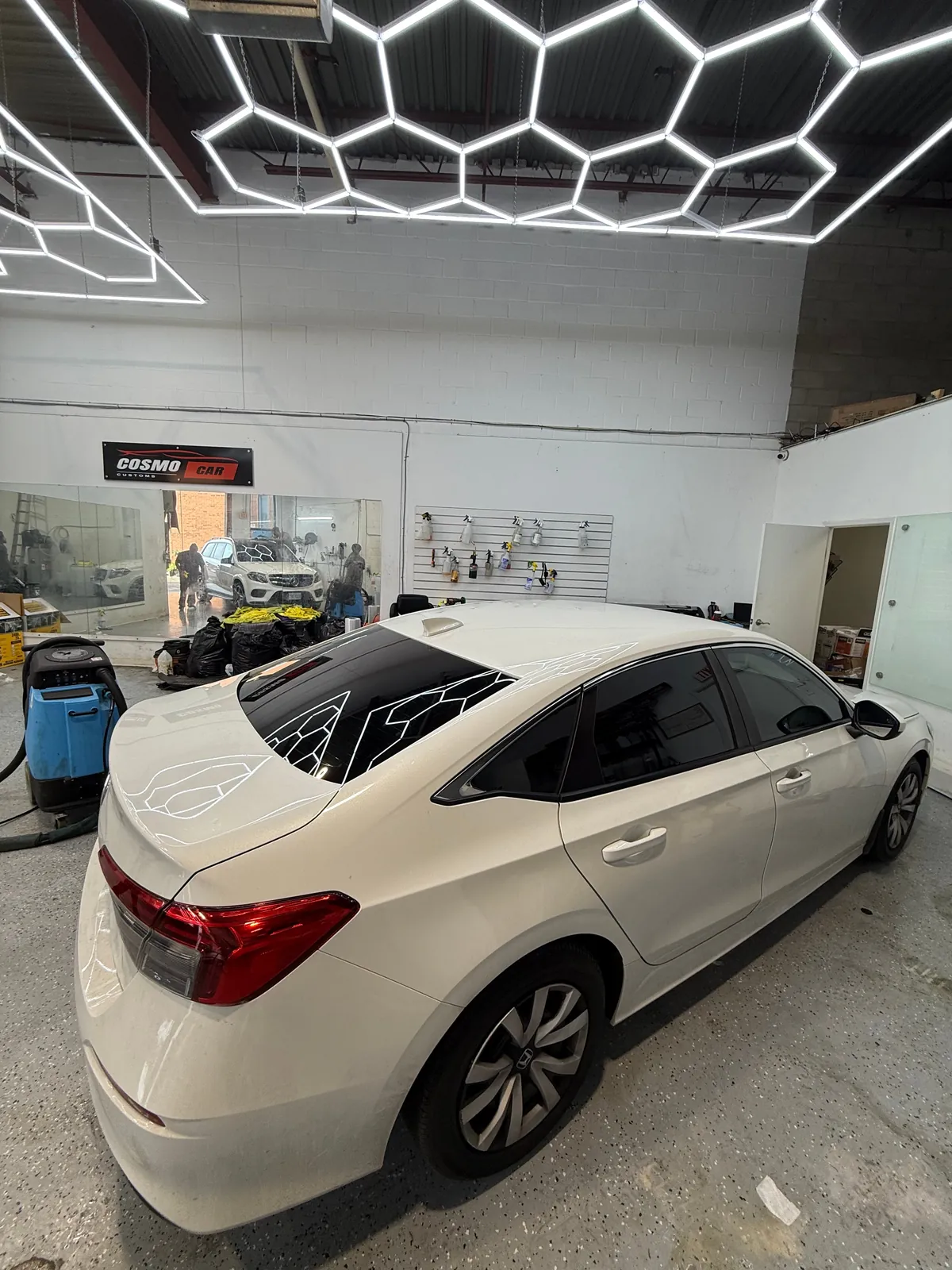
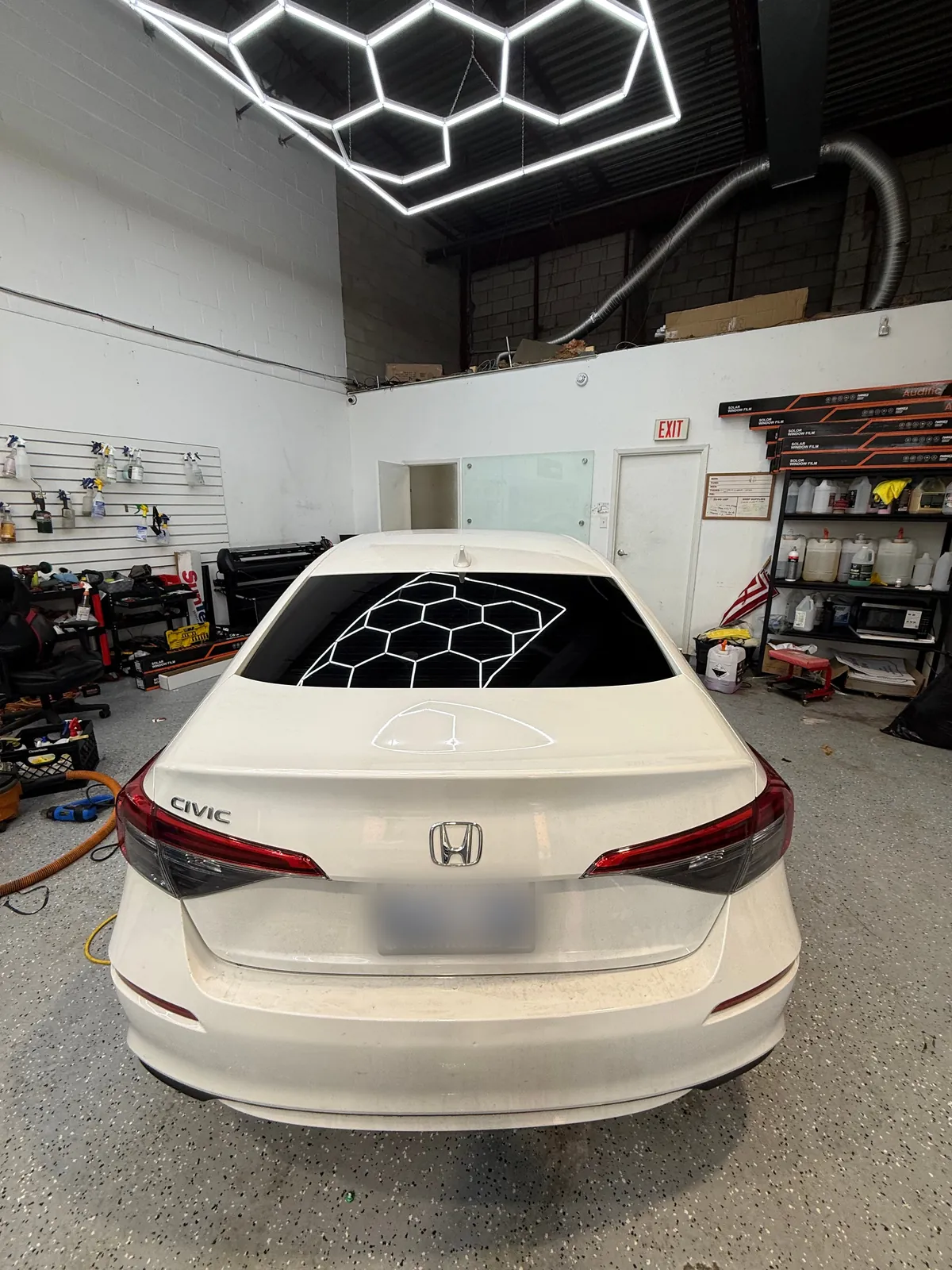
"When can I roll my windows down?" is the first question almost everyone asks when they collect a freshly tinted car from our Mississauga studio. The answer is simple, but the reasons behind it matter, especially in October and November, when the weather turns cold and grey and new film takes longer to settle. Here is what to expect in the first few weeks, and how to look after your tint for as long as you own the car.
The short answer
- Windows: keep them rolled up for three to five days. In cold, cloudy weather, stay at the long end of that range.
- Haze and water pockets: normal while the film dries out. Leave them alone and they clear on their own.
- Cleaning: do not clean the inside of the tinted glass while the film is drying. After that, use a soft cloth and an ammonia-free cleaner.
- Washing the car: carry on as normal. Automotive film goes on the inside of the glass, so a wash does not touch it.
Why new tint needs time to cure
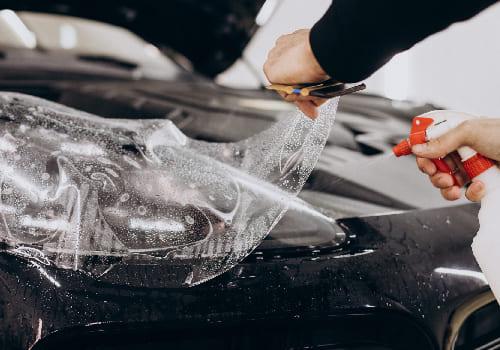
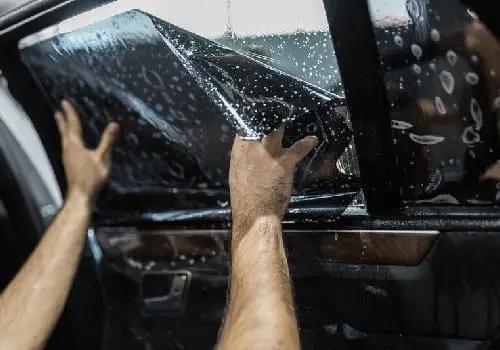
Window film goes on wet. The glass is sprayed with a slip solution so the film can be positioned exactly, then the water is squeegeed out from underneath. Some moisture always stays trapped between the film and the glass, and the International Window Film Association explains that on car windows the "cure" is really the drying time of that leftover water. Until it dries, the adhesive has not reached full strength.
That is why the windows have to stay up. When a door window rolls down, its top edge slides through the rubber seal, and on film that has not dried yet the seal can catch the edge and lift or crease it. A few days of patience protects a film that is meant to last as long as you own the car.
You may also notice a very thin gap, up to a millimetre or two, between the film and the top edge of the door glass. That is normal. The IWFA's inspection guidelines allow for it, so the seal does not catch the film every time the window moves.
Why it takes longer in the fall and winter
Heat and sunlight speed up the drying. Solar Gard's care instructions say cold or overcast weather lengthens the dry-out time, while warm weather and direct sun shorten it. In a Mississauga summer the haze can be gone in a few days. In October and November, with cool nights and grey days, the same film can take noticeably longer.
- Park in the sun when you can, or in a warm garage overnight.
- Give it the full five days before rolling the windows down, or a little longer if the week has been cold and wet.
- If frost forms on the inside of the glass, clear it with the heater, never with an ice scraper.
None of this is a reason to wait until spring. We install indoors in our studio, so the weather does not stop the job, and the low fall and winter sun is when glare is at its worst. UV drops in winter but does not disappear, and the Government of Canada notes that fresh snow can reflect over 80% of the sun's UV rays.
What is normal in the first few weeks
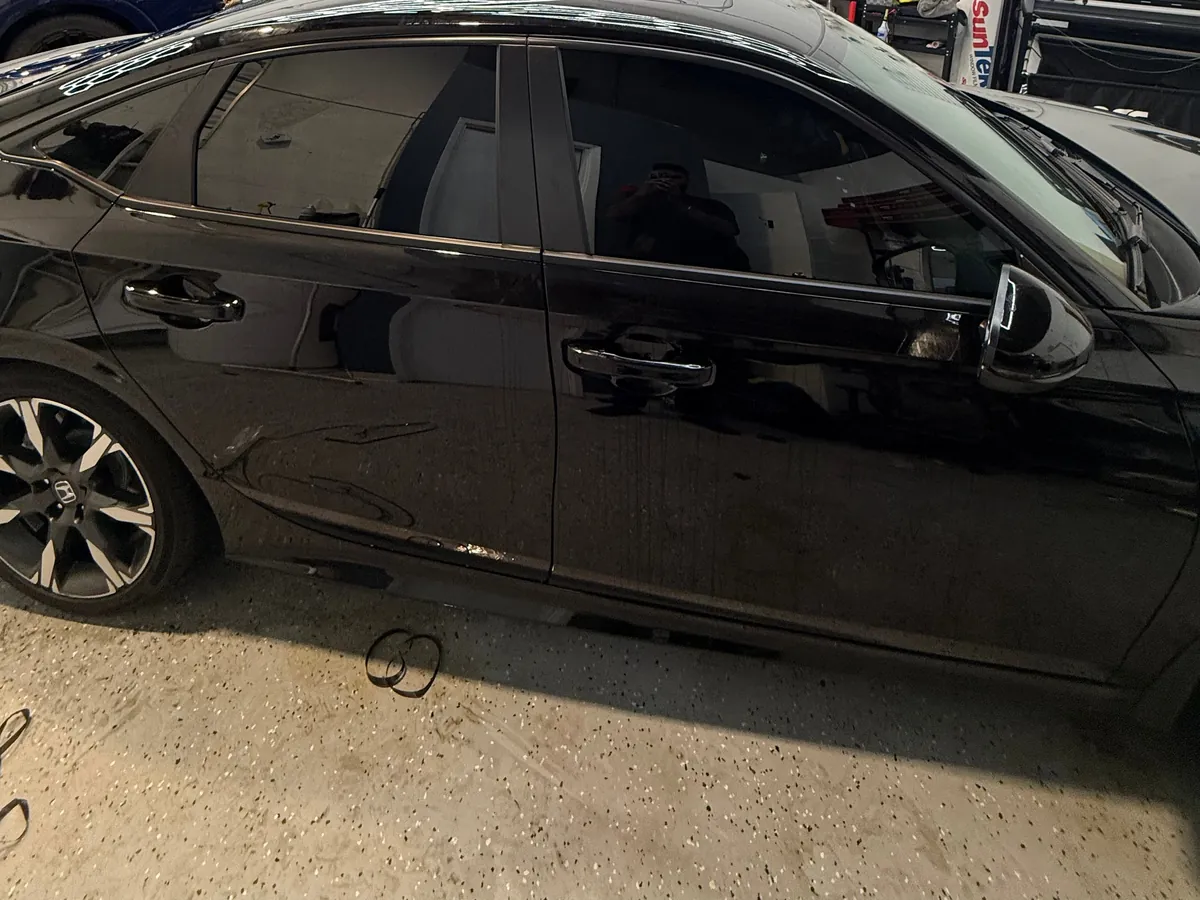
- A slight haze or cloudiness, most visible in daylight.
- Small water pockets that shrink and disappear day by day.
- A slightly wavy look when you peer through the glass at a sharp angle.
- The thin gap along the top edge of the door glass described above.
The IWFA's guidelines are clear that water haze and water distortion during drying are not defects. Pressing on a water pocket risks creasing the film or pushing the moisture somewhere it cannot escape, so leave them alone.
What is not normal
- Bubbles or pockets that are still there once the film has had time to dry, or that are getting bigger.
- An edge that lifts, peels or catches on the seal.
- Creases, scratches or nicks in the film.
- Later on, film that fades or turns purple.
To check the work properly, do what the IWFA guidelines describe: look straight through the glass from inside the car, and from about three feet away outside, in natural daylight. If anything looks wrong, send us a photo with the window and your vehicle details. Our lifetime warranty covers fading, turning purple, bubbling, peeling, delamination and our workmanship for as long as you own the car, and if the film is at fault we replace that window at no charge.
How to clean tinted windows
Hold off cleaning the inside of the glass while the film dries out. Solar Gard's own care instructions say not to clean the film for 30 days after installation, and the longer you leave it, the better. After that:
- Use a clean, soft microfibre cloth with a mild mix of dish soap and water. Solar Gard suggests about 15 ml of dish soap per litre.
- If you prefer a glass cleaner, make sure it says ammonia-free. Ammonia can damage film, and our warranty does not cover ammonia damage.
- Never use paper towels, abrasive pads, scrapers or razor blades on the inside of the glass.
- Keep separate cloths for the inside and outside glass, so road grit from the outside never ends up rubbing the film.
- Watch seatbelt buckles, rings, keys and anything loaded against the back windows. Film is tough, but a sharp edge can still mark it.
Your aftercare checklist
- Keep the windows up for three to five days, longer in cold, grey weather.
- Do not press, pick at or peel any edge or water pocket.
- Park in the sun or a warm garage when you can.
- Do not clean the inside of the tinted glass while the film dries.
- After that, a soft cloth and an ammonia-free cleaner only.
- No scrapers or sharp objects on the inside of the glass.
- Message us if anything still looks wrong once the film has dried.
Still choosing a film?
Tinting at our studio starts at $150 for Nano-Ceramic, $249 for Solar Gard and $299 for SunTek Evolve, covering the four side windows and the back windshield, before HST. Our window tint prices guide explains the difference between the three films, and our Ontario tint law guide covers how dark each window can go. Most cars are done in two to four hours. See the films and book your tint.