

Environment and Climate Change Canada estimates that about five million tonnes of road salt go onto Canadian roads every winter. A good share of it ends up on the cars driving Highway 401, Dundas and Hurontario between November and April. Salt is why a five-year-old car in Mississauga can look older than a ten-year-old car from Vancouver. The good news is that the damage is predictable, so it is preventable. Here is what salt attacks and what to do about each surface, in the order we do it in the studio.
What road salt actually does to a car
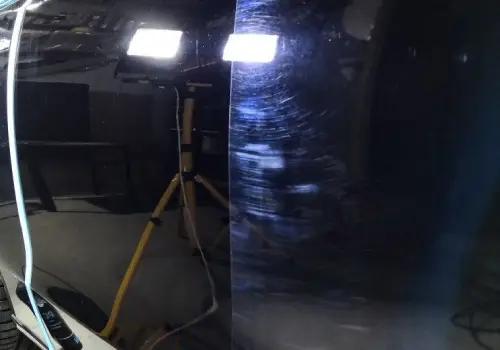
- Paint and clear coat. Salt itself does not eat clear coat, but dried salt film holds moisture against the surface and traps grit. Every wipe of a sleeve or brush drags that grit across the paint, and the salt crust etches around edges, badges and chips where the paint is thinnest.
- Chips and bare metal. Anywhere a stone has already opened the paint, salt water reaches metal and rust starts under the edge of the chip. This is how a pinhead chip on a hood becomes a bubbling patch by spring.
- Wheels and brakes. Hot brake dust plus salt bakes onto wheel faces and pits the finish. Salt also corrodes the hubs, rotors and fasteners behind them.
- Glass. Salt spray dries into a film that glares badly in low winter sun and makes wipers chatter.
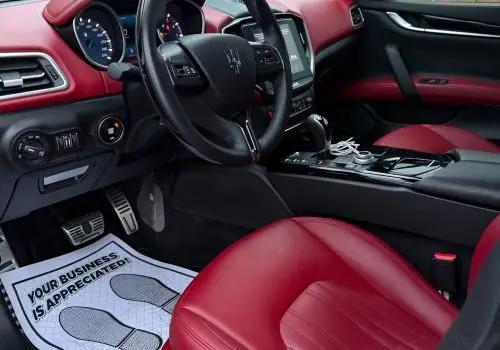
- Carpets and mats. Slush comes in on boots, dries into white salt lines and wicks into the carpet padding, where it holds damp and smells for months.
The checklist, in order
1. Wash and decontaminate the paint (October)
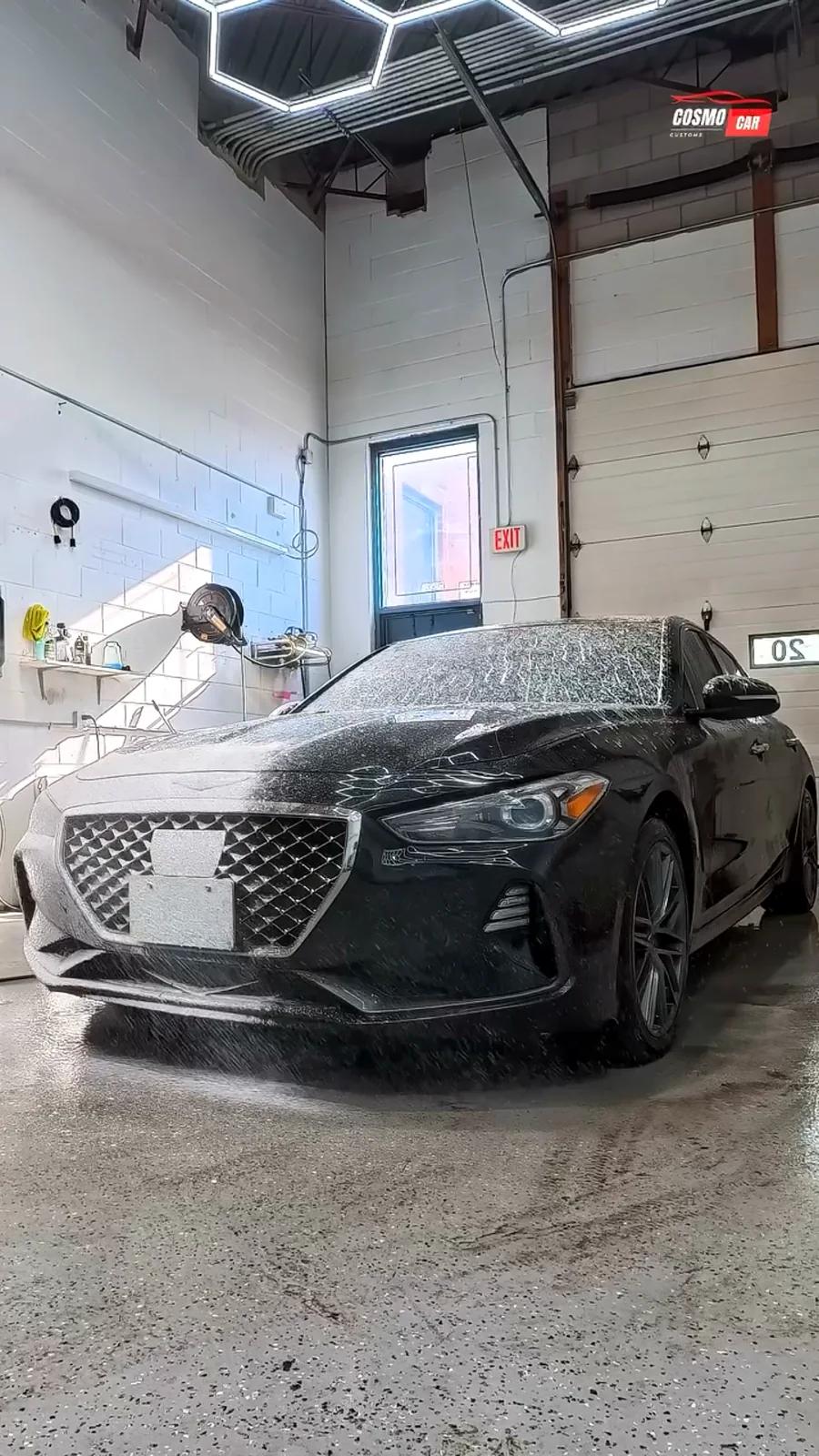
Whatever protection you choose has to go onto clean paint. A proper pre-winter wash includes an iron remover for the brake dust bonded to the paint, a tar remover, and a clay treatment so the surface is smooth. This is part of every ceramic coating and film install we do, and it is worth having as a stand-alone detail even if you are not coating.
2. Seal the paint: ceramic coating or paint protection film
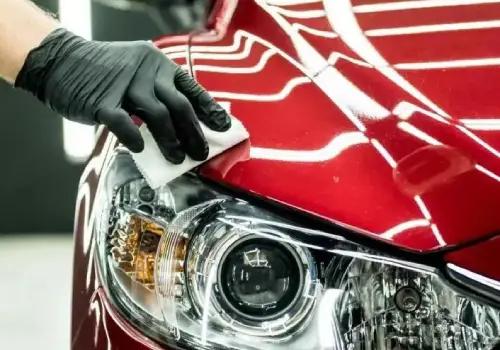
This is the step that changes how winter goes. A ceramic coating cures into a hard, slick layer that salt and slush do not bond to, so a plain rinse takes it off instead of a scrub. It also resists the chemical etching that dulls uncoated paint. Coatings come in 3, 6 and 10-year packages and the car is ready in one to two days.
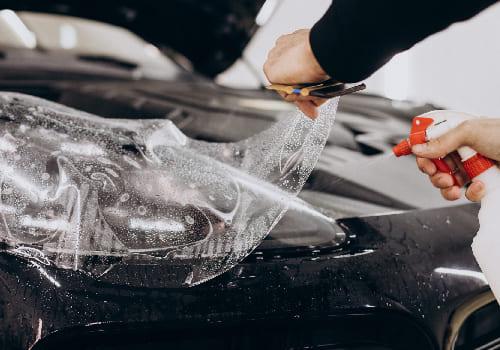
If your car sees a lot of highway, add paint protection film on the front bumper, hood and mirrors. Film stops the stone chips that salt then turns into rust, which a coating cannot do. Most of our winter-prep customers coat the whole car and film the front. Our PPF vs ceramic guide explains the difference.
3. Coat the wheels and glass
Wheel faces coated with a ceramic shed brake dust and salt with a rinse instead of a scrub, and the finish stays bright. On glass, a hydrophobic coating makes rain and slush bead and clear faster at speed, cuts glare from the salt film and helps the wipers. Both are quick add-ons to a coating or detail visit.
4. Fit custom floor mats with raised edges
Universal rubber mats slide, leave gaps, and let slush run under them onto the carpet. Custom-fit mats made to your exact make, model and year have raised edges that hold the slush until you tip it out, and they hose clean in seconds. Fit them before the first snow, not after the carpet is already stained. Our floor mats guide has more.
5. Clean the interior before it gets sealed in
Once the windows stay closed for five months, everything in the cabin stays in the cabin. An interior detail in the fall gets summer sand out of the carpet, conditions leather before the heater dries it out, and gives you a clean baseline so any salt that does get in is easy to spot and treat.
6. Fix chips now, not in spring
Any chip that shows primer or metal should be touched up before winter. Salt water finds bare metal fast. If you are having film installed, we do this before the film goes on so the chip is sealed under it.
Through the winter
- Rinse every two weeks when the temperature is above freezing, including wheel wells and under the doors. On a coated car this is a touchless or pressure rinse, not a scrub.
- Avoid brush car washes. The brushes carry grit from the car before yours across your paint. If you have to use a machine, use a touchless one.
- Tip the mats out weekly. Raised-edge mats only work if the slush leaves the car.
- Do not rub frost or salt film off the paint with a sleeve or brush. That is where winter swirl marks come from.
When to book
October and early November are ideal. Coatings and film cure best above freezing, the roads are still salt-free, and the studio is less busy than the week after the first snowfall. If you are reading this in January, it is not too late: we wash the salt off, correct any marring and coat the car in a heated studio, and it goes back out protected for the second half of winter.
In spring
Book a decontamination wash once the salt is gone. It removes the season's bonded iron and film, restores the beading on the coating, and lets us check the paint and film for chips. A coated car maintained this way comes out of an Ontario winter looking the way it went in.
Want the whole checklist done in one visit? Ask for a winter prep quote and tell us the vehicle. We will recommend the combination that fits how and where you drive.
Sources
- Environment and Climate Change Canada, Code of practice for the environmental management of road salts (about 5 million tonnes of road salts used each year in Canada)
- Government of Ontario, Winter driving