Most people do not think about removing window tint until they have to. The film has turned purple, the back windshield is full of bubbles, or the front windows are darker than they want to explain at the roadside. Getting old film off sounds simple, and the film itself usually is. What makes tint removal a careful job is what the film leaves behind, and what sits under it on the back windshield.
The short answer
- Old tint comes off when it fails or is no longer legal: purple colour, bubbles, peeling edges, haze, or front windows that are too dark.
- The film is the easy part. The adhesive it leaves on the glass takes most of the time.
- The back windshield is the risky window. Its defroster lines sit on the inside of the glass, right under the film.
- No sharp tools or abrasive cleaners on those lines. Car makers warn that they can damage the defroster grid.
- Heat or steam does the work. Warming the film and glue lets them release instead of being scraped off.
When old tint needs to come off
- It has turned purple. Cheaper dyed films fade as the dye breaks down in the sun, and the purple tinge does not go away.
- It is bubbling or peeling. Bubbles that appear on film that used to be clear, or that keep growing, mean the adhesive is failing.
- It is hazy at night. Scratched, cloudy or ageing film blurs headlights and street lights.
- It is darker than you want. Ontario requires a clear view of the driver through the front door windows, so dark film on the front doors is a common reason to start again. Our Ontario tint law guide explains the rules window by window.
Our guide to how long window tint lasts covers why film fails and how to tell normal drying from a real defect. One thing never works: putting new film over old film. The bubbles, colour and failing glue stay underneath.
Why the back windshield is the tricky one
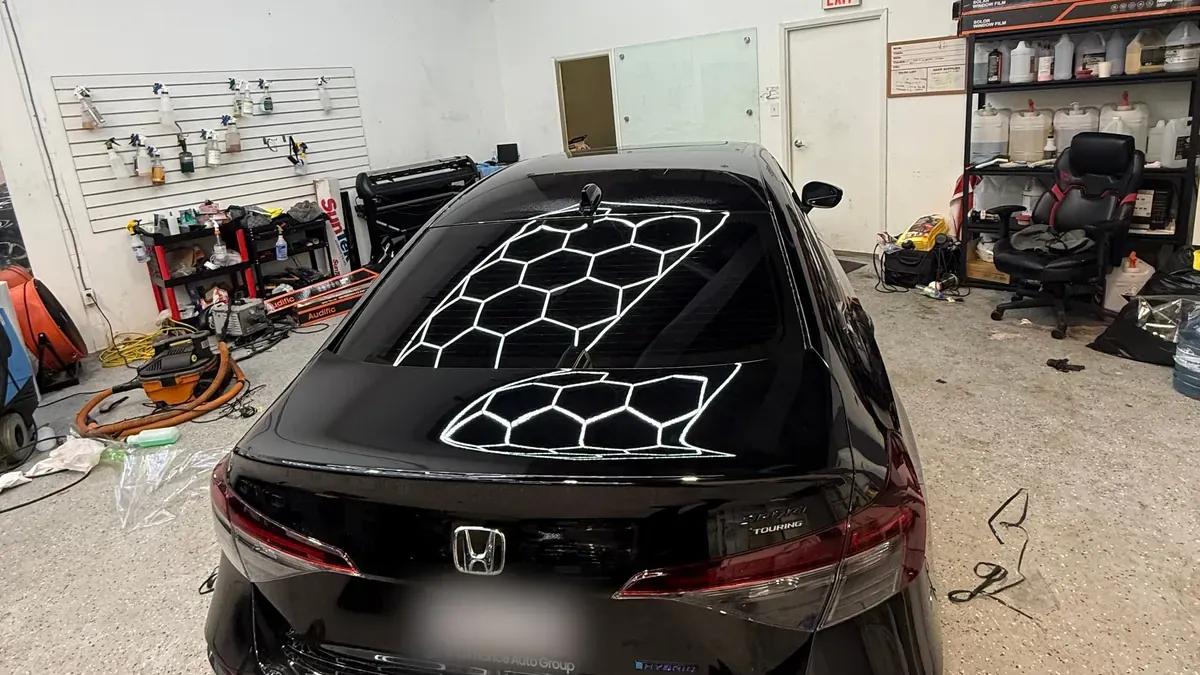
The thin lines across your back windshield are the defroster grid, conductors bonded to the inside surface of the glass that heat up to clear frost and fog. When the window is tinted, the film is applied directly over them, and its adhesive grips the lines as well as the glass.
That is why car makers are strict about the inside of that window. Mazda's owner's manual says not to use sharp instruments or window cleaners with abrasives on the inside of the rear window because they may damage the defogger grid. Kia's manual gives the same warning to protect the conductors bonded to the inside of the glass. A razor blade dragged across the lines, or an abrasive pad used to scrub off old glue, can nick a line, and a cut line stops heating, which leaves a cold, foggy band across the window every winter morning.
How tint removal is done properly
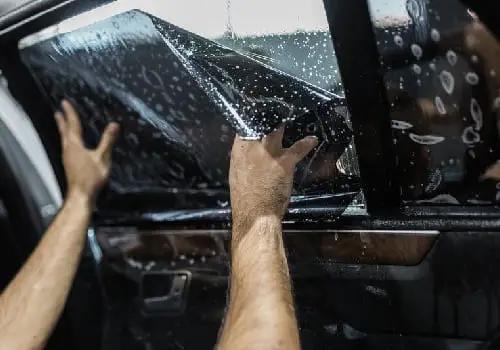
- Warm the film. Steam or controlled heat softens the film and, more importantly, the adhesive underneath it.
- Peel slowly. Warm film comes away in one sheet with most of its glue. Old, brittle film tears into small pieces and takes longer.
- Clean off the adhesive. What the film leaves behind is softened again and wiped away with an adhesive remover, taking particular care on the back windshield so nothing scrapes across the defroster lines.
- Clean and inspect the glass. The glass has to be completely clean before new film goes on, or every speck of old glue shows up as a flaw.
- Fit new film, cut to your car on a plotter, if you are replacing it.
Can you remove window tint yourself?
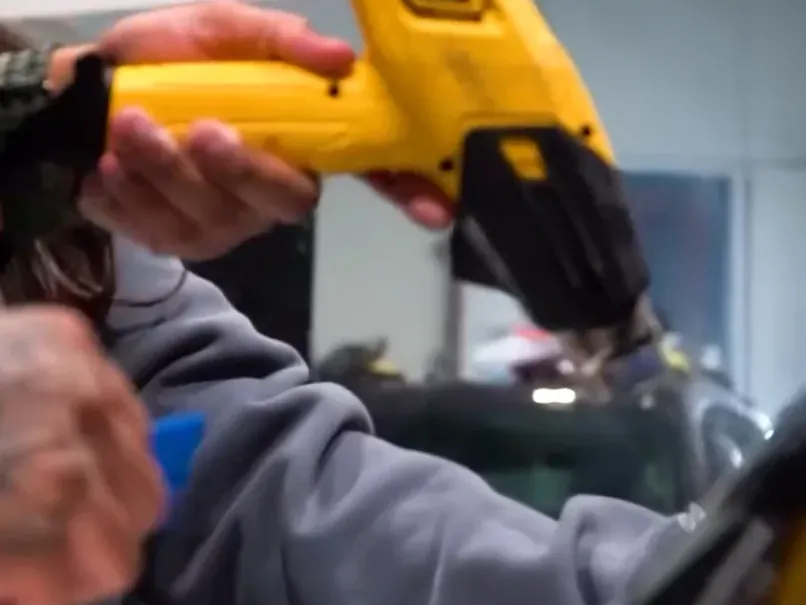
You can, with patience. The common DIY methods are a household steamer or a hair dryer to soften the film, or soaking the film with an ammonia solution under black plastic so the sun warms it. Before you start:
- Be careful with ammonia. The CDC warns that household ammonia can release gas if it is mixed with certain other cleaning products, and it says plainly: do not mix household cleaners. Exposure to high levels can hurt your eyes, throat and lungs. Work outdoors or with the doors open, and protect the seats and trim.
- Keep blades off the back windshield. Follow the car makers' warnings: no razor blades, scrapers or abrasive pads on the inside of the rear glass.
- Expect glue to stay behind. The film often comes off and leaves a sticky layer that takes longer than the film itself.
- Do it somewhere warm. Film and adhesive release far more easily when they are warm. In an Ontario winter, that means a heated garage, not a driveway.
If the defroster stops working in sections afterwards, the lines have been damaged, and repairing them is a separate job. That risk is the main reason most people leave the back windshield to a professional even if they do the side windows themselves.
What it costs and how long it takes
Removal depends on how old and brittle the film is, how many windows it is on, and whether the back windshield is included. At our studio it is quoted separately from the new tint, because back windshields with defroster lines take longer and need more care, and it adds time to the appointment, which we tell you about when you book. New tint at our studio starts at $150 for Nano-Ceramic, $249 for Solar Gard and $299 for SunTek Evolve for the four side windows and the back windshield, before HST, and every film carries a lifetime warranty against colour fading and peeling. Our window tint prices guide explains the difference between the three films.
Tint removal at Cosmo Car Customs
Bring the car to our studio on Atlantic Drive in Mississauga. Old film is steamed and peeled, the adhesive is cleaned off the glass with extra care on the back windshield, and new film is computer-cut on a plotter for your exact car, so no blade touches your glass or trim. Tell us what is wrong with the old tint when you ask for a quote, and include a photo if you can. See our window tinting service or get a quote.