You walk back to the car and there it is: a thin line across the door from a shopping cart, a key, or a snow brush that caught the wrong way. The first question is always the same. Can it be buffed out, or does it need paint? The answer depends on one thing, how deep the scratch goes, and you can get a good idea of that yourself in about ten seconds.
The short answer
- Scratches in the clear coat usually buff out. Machine polishing levels the clear coat around them until they are gone.
- The fingernail test sorts them. If your nail glides over the scratch, it is probably in the clear coat. If it catches, it is deeper.
- Deeper scratches can be softened, not erased. Polishing rounds off the edges so they catch less light, but the line stays until it is painted.
- Stone chips need paint. Polishing cannot put back paint that has been knocked off.
- In winter, the snow brush is the usual culprit. Use a foam brush, pull the snow towards you and keep the ice scraper on the glass.
How car paint is built, and where a scratch stops
Factory paint is a stack of thin layers. The RACV, the Victorian motoring club, describes three over the metal: primer, a base coat that carries the colour, and a clear top coat that gives the gloss and takes the everyday wear. Which?, the UK consumer group, sorts scratches by how far down they go:
- Shallow: a scratch in the clear coat only.
- Medium: through the clear coat and into the base coat.
- Deep: into the primer or down to the metal of the panel.
The whole stack is thin. DeFelsko, which makes the paint depth gauges detailers use, puts most factory paint at about 100 to 180 microns in total, roughly the thickness of one or two sheets of printer paper, and only part of that is clear coat. Once a scratch is through the clear, there is no clear coat left beneath it to level, which is why polishing alone cannot remove it.
The fingernail test
Wash and dry the area first, so you are feeling the scratch and not dirt. Then run a fingernail lightly across the scratch, at a right angle to it, not along it. Try it at a few points, because a scratch is rarely the same depth all the way.
- Your nail glides over it. The RACV says the scratch may only have damaged the clear top coat. These are the scratches polishing removes.
- Your nail catches. Which? calls that at least a medium scratch, and the RACV says it is likely through the top coat into the base coat or primer.
- You can see grey, white or bare metal at the bottom. It has gone through the colour. That needs paint, and bare metal needs it soon, before rust starts.
The test is a rough guide, not a measurement. Paint transfer from another car or a bumper can feel like a deep scratch when it is actually sitting on top of the clear coat, and it often comes off with polishing. That is why we inspect under the lights and check paint depth before promising anything.
What polishing can fix
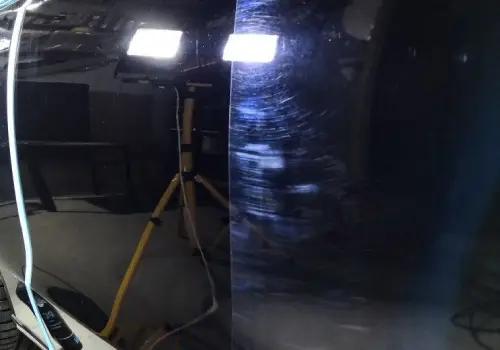
Machine polishing, which is what paint correction is, removes a very thin, even layer of clear coat until the surface is level with the bottom of the defect. Our paint correction guide explains the process step by step. It reliably removes:
- Swirl marks and fine wash scratches from brush car washes and dirty wash mitts.
- Light scratches that do not catch a fingernail, such as bag, zip and fingernail marks around door handles and the trunk lip.
- Paint transfer and light scuffs, where another surface has left marks on top of the clear coat.
- Light scratches from snow brushes and brooms, as long as they have not gone through the clear coat.
What it cannot fix
- Scratches that catch your nail. We can often round off the edges so the scratch catches less light and is much harder to see, but the line itself stays.
- Stone chips. The paint has been knocked off, so there is nothing to polish. Chips need touch-up paint.
- Scratches through to primer or metal. These need paint. A long one along a panel is body shop work.
- Dents and creases. Polishing only works on the surface of the paint.
More polishing is not the answer to a deep scratch. DeFelsko notes that most automakers recommend removing no more than about 8 microns of clear coat, so chasing a deep scratch with heavier and heavier compound in one spot can thin the clear coat or cut through it, and turn a scratch into a panel that needs repainting.
Touching up stone chips and deeper scratches
Chips and scratches that reach the colour are filled with colour-matched touch-up paint, and car makers treat them as urgent. Volvo's owner guidance for Canadian models says paint damage needs immediate attention to avoid rust, and that touch-up paint should go on a clean, dry surface above 15 °C. A chip down to bare metal gets primer first, then thin coats of colour.
That temperature matters from November to April. A driveway or an unheated garage in a Mississauga winter is well below 15 °C, so touch-up is a job to do indoors in a warm space. Our paint touch-up service covers chips and minor scratches, colour-matched to your paint. We do not do dent, collision or body shop repairs, so a deep scratch that runs along a whole panel, or one with a dent behind it, is a job for a body shop.
Do scratch remover products work?
On the right scratch, yes. In tests published in August 2026, Which? found that scratch removers worked well on shallow scratches, and that a polishing machine was not significantly better than applying the products by hand. Most products do not claim to remove medium or deep scratches, and Which? recommends taking a car with a deep scratch to a professional. Two things to know if you try one:
- Some products hide rather than remove. Glazes, fillers and waxes can make a shallow scratch disappear for a while, and it comes back after a few washes. Which? notes that WD-40 can hide a shallow scratch until the car is next cleaned.
- Work gently. The RACV advises working in the shade on a cool panel. Use the least aggressive product that works, keep it on the scratch, and stop once it stops improving.
Winter is scratch season
Many of the fresh scratches we see between December and March were not made by keys or shopping carts. They come from clearing snow. Snow that has sat on a car in Mississauga is full of road grit and salt spray, and anything dragged across it works like fine sandpaper. Cars.com's editors note that scratches in the paint are common damage from improper snow removal: a nylon snow brush may leave light scratches, and a shovel can leave a very deep one.
- Use a foam snow brush on the paint, not a bristle brush, a household broom or a shovel.
- Pull the snow towards you in straight lines rather than pushing and scrubbing, and work from the top of the vehicle down.
- Keep the ice scraper on the glass. It is made for glass. On paint it can cut straight through the clear coat.
- Leave ice on the body to thaw. Clear the glass, lights and roof, and let ice on the paint melt off rather than chipping at it.
- Protect the paint before the snow. Cars.com recommends a good wax or sealant to protect the paint from brushes and brooms. Our pre-winter wax guide covers the options, and a ceramic coating lasts years instead of weeks.
Automatic brush car washes are the other big source of swirls, and they get busy in winter when everyone is rinsing off salt. A touchless wash or a careful hand wash gets the salt off without the brushes. Our car wash vs car detailing guide explains the difference.
How to keep new scratches away
- Wash gently. A clean mitt, plenty of rinsing and a soft drying towel. Never wipe a dusty or salty car with a dry cloth.
- Ceramic coating does not make paint scratch-proof, but it makes the surface slick and easier to clean, so washing drags less across it. See how long ceramic coating lasts in Ontario.
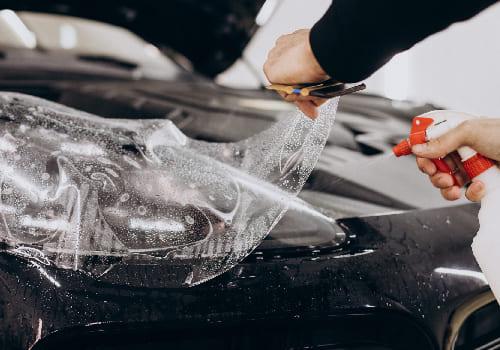
- Paint protection film is a physical layer over the paint. It takes stone chips and light scratches instead of the paint, and its self-healing top coat lets light scratches flow back out with warmth. Our PPF guide explains how long it lasts.
- Correct before you protect. Coatings and film seal in whatever is underneath, so scratches are polished out first.
Scratch repair at Cosmo Car Customs
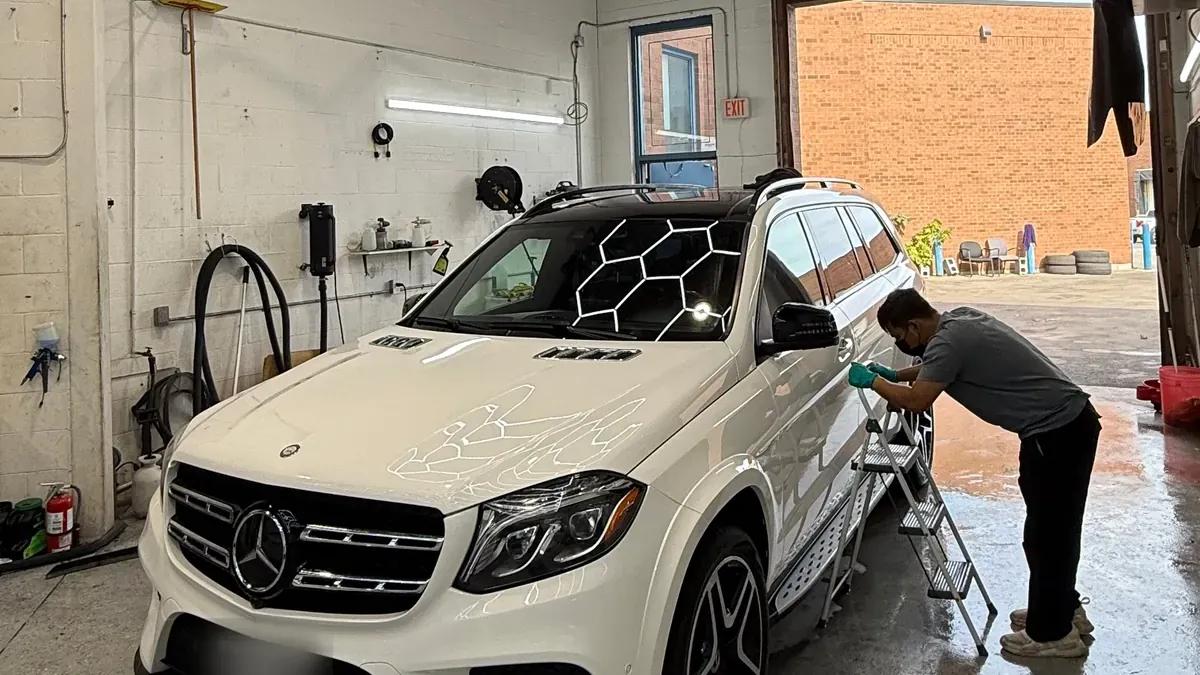
Bring the car to our studio on Atlantic Drive in Mississauga and we will look at every scratch under the inspection lights, check paint depth where it matters, and tell you honestly which scratches will polish out, which ones we can make much less visible, and which ones need paint. Light scratches and swirls come out with a one-stage polish or a two-stage correction, chips get colour-matched touch-up, and we can protect the finished paint with a ceramic coating or paint protection film in the same visit. The price depends on the vehicle and how much correction it needs, and we confirm it before we start. See our paint correction service or get a quote.
Sources
- Which?, "Best car scratch removers 2026" (August 2026)
- RACV, "How to repair and remove scratches from your car's paintwork" (April 2025)
- DeFelsko, how to use paint thickness gauges for better automotive detailing
- Volvo Cars Canada, touching up paintwork
- Cars.com, "How to Safely Remove Snow and Ice From Your Car" (February 2025)
- Our guides to paint correction, how long PPF lasts and waxing before winter