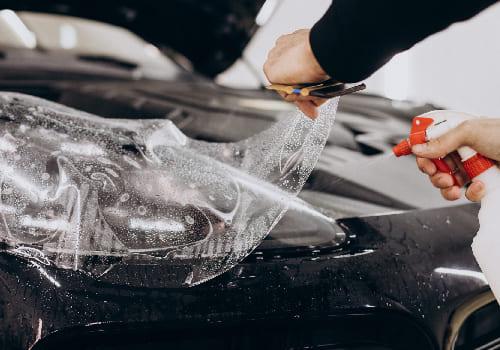
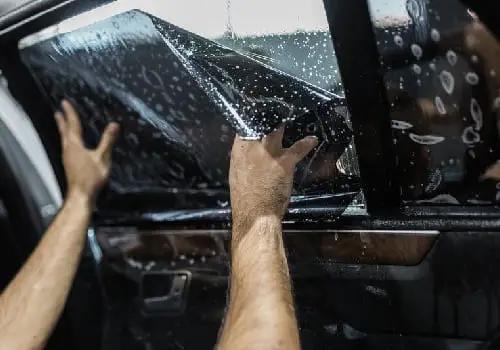
Paint protection film is one of the bigger investments you can make in a car, so it is fair to ask how long it lasts and what you need to do to get there. The good news is that modern film is tough and the care routine is simple. The bad news is that the few things that do damage it, like brush car washes and a pressure washer aimed at an edge, are things many drivers do every week in an Ontario winter. Here is how long film lasts, how to wash it, and when it needs replacing.
The short answer
- Quality film lasts for years. SunTek backs its Ultra film with a 10-year limited warranty against cracking, bubbling and yellowing, and its Reaction film with a 12-year limited warranty.
- Washing decides most of it. SunTek recommends waiting 3 days before the first wash, hand washing with a soft cloth, and avoiding automatic car washes and power washes, which can lift the film.
- The edges are the weak point. XPEL advises keeping pressure washers away from film edges for the same reason.
- Light scratches heal themselves with heat from the sun, a warm engine or warm water.
- Yellowing, cracking or peeling edges are the signs a film is at the end of its life.
How long does paint protection film last?
The warranty is the clearest guide, because it is what the manufacturer is prepared to stand behind. SunTek backs its Ultra film with a 10-year limited warranty against cracking, bubbling or yellowing, and its Reaction film with a 12-year limited warranty. Certain restrictions apply, and the exact term depends on the film you choose, so ask your installer which film you are getting and what its warranty covers.
Budget films and older generations of film are the ones that tend to yellow, crack or go cloudy early. That is why the film's warranty matters more than the price per square foot. On a car you plan to keep, quality film installed properly usually stays on for as long as you own it.
The first few days after installation
- Small water pockets and a slight haze are normal. They clear on their own as the film settles, so leave them alone.
- Wait at least 3 days before washing. That is SunTek's guidance. XPEL says 48 hours for its films. We go with the longer one.
- Do not pick at an edge or press out a bubble. If something still looks wrong after the first couple of weeks, bring the car back and let us look at it.
How to wash a car with PPF
- Rinse first to float off loose grit and salt before anything touches the film.
- Hand wash with a soft mitt and a pH-neutral car shampoo. SunTek's guidance is simply soap, water and a soft cloth. The two-bucket method in our detailing tips keeps grit out of the mitt.
- Wipe along the film edges, not into them, so the mitt does not catch and lift an edge.
- Dry with a clean microfibre towel, patting rather than dragging near the edges.
- If you use a pressure washer or a self-serve wand, keep it about a metre away and never aim it straight at an edge. XPEL gives 3 feet as the distance for its colour film.
What to avoid
- Automatic tunnel and brush washes. SunTek warns they can lift the film, and XPEL says tunnel washes can severely scratch and damage the finish.
- A pressure washer aimed at the edges, which is the quickest way to lift film.
- Solvents, abrasive polishes and rubbing compounds. XPEL's care guide says not to use unapproved solvents, chemicals or abrasives on the film.
- Leaving bird droppings, bugs and tree sap to bake on. SunTek and XPEL both recommend removing them as soon as possible.
- Stiff snow brushes and ice scrapers on the hood. Use a soft foam snow broom. Light marks will heal, but a hard scraper can cut through the film.
- Pressing a lifted edge back down yourself. Dirt gets under it and it will not hold. Bring it in instead.
Can you wax, coat or clay PPF?
- Wax: yes, on gloss film. SunTek suggests a non-abrasive car wax once or twice a year. Matte film needs products made for matte finishes, because some waxes add gloss.
- Ceramic coating: yes. Coating over the film adds the same water beading and easy cleaning as on paint, and keeps the whole car looking consistent. Our PPF vs ceramic coating guide explains how they work together.
- Clay: ask your installer first. Film rarely needs it, and an iron remover with a gentle wash usually clears what builds up. Our clay bar guide covers when clay is worth it.
How self-healing works
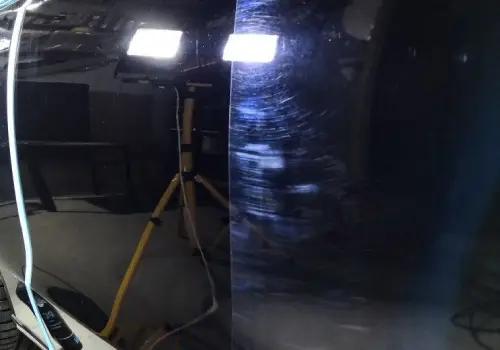
The top coat of quality film is designed to flow back into shape when it warms up. SunTek says its self-healing surface repairs most scratches with heat from the sun, a warm engine or warm water. XPEL says light scratches in its film heal in 20 to 30 minutes at room temperature, and that pouring warm water of around 49°C (120°F) over the area speeds it up. Swirls from washing and light scuffs disappear this way. A deep cut that goes through the film will not heal, but that panel can be re-filmed without touching the rest of the car.
Signs your PPF needs replacing
- The film has turned yellow or cloudy, which is easiest to see on white and silver paint.
- It has cracked, or the edges are peeling and collecting dirt.
- Bubbles have appeared after the first couple of weeks.
- Deep scratches or tears have not healed.
- Stains have set into the film and will not wash out.
Quality film comes off cleanly with heat and leaves the factory paint underneath. SunTek recommends that only a professional dealer removes its film, and we check any repainted panels first, because a poor respray can lift with the film.
PPF through an Ontario winter
Film is at its most useful between November and April, when sand and salt are thrown at the front of the car every day. The salt does not hurt the film, but grit left on it is what scratches it when you wipe it off dry. Rinse it off whenever the temperature allows, hand wash when it is above freezing, and keep any wand well back from the edges. Our road salt guide has the full winter routine.
PPF at Cosmo Car Customs
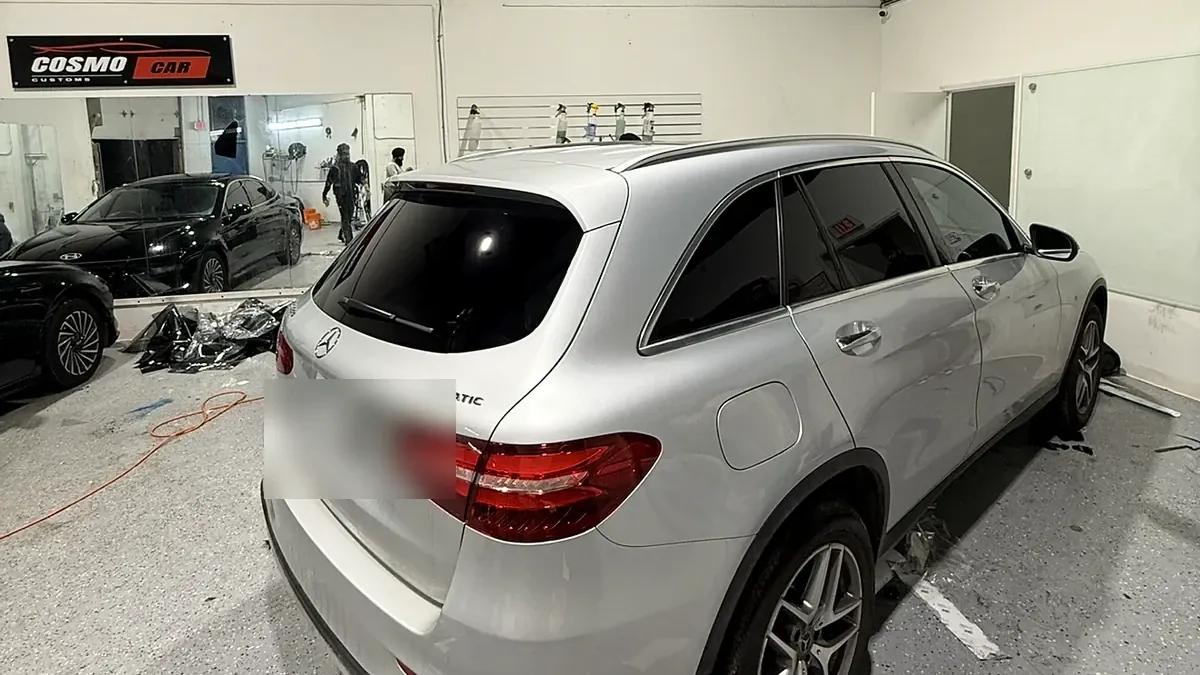
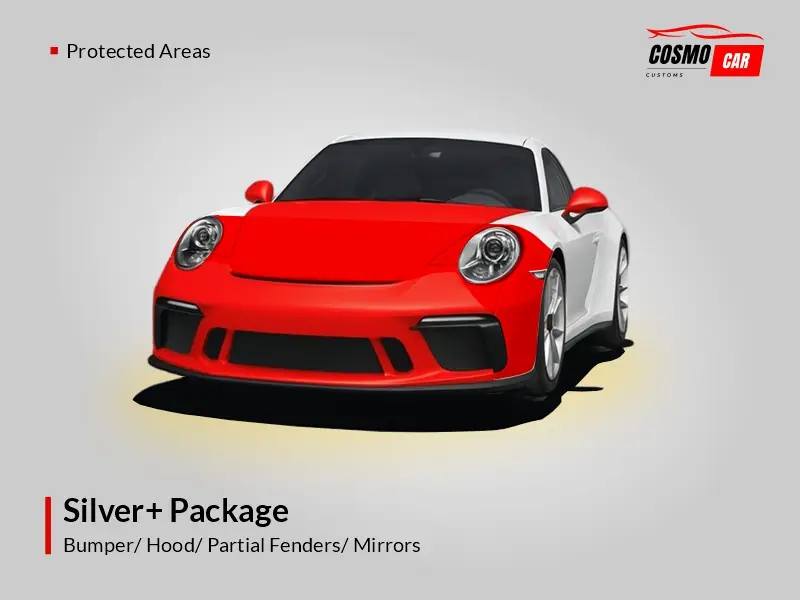
We are an authorised SunTek dealer. Every kit is precision cut for your exact make, model and year from a pattern library, so the edges are clean and there is little or no blade work on your paint, and we register the manufacturer warranty at install. Coverage runs from Bronze, the leading edges, to Platinum, the whole car. See our PPF packages, read whether PPF is worth it in Ontario, or book at our studio on Atlantic Drive in Mississauga.