



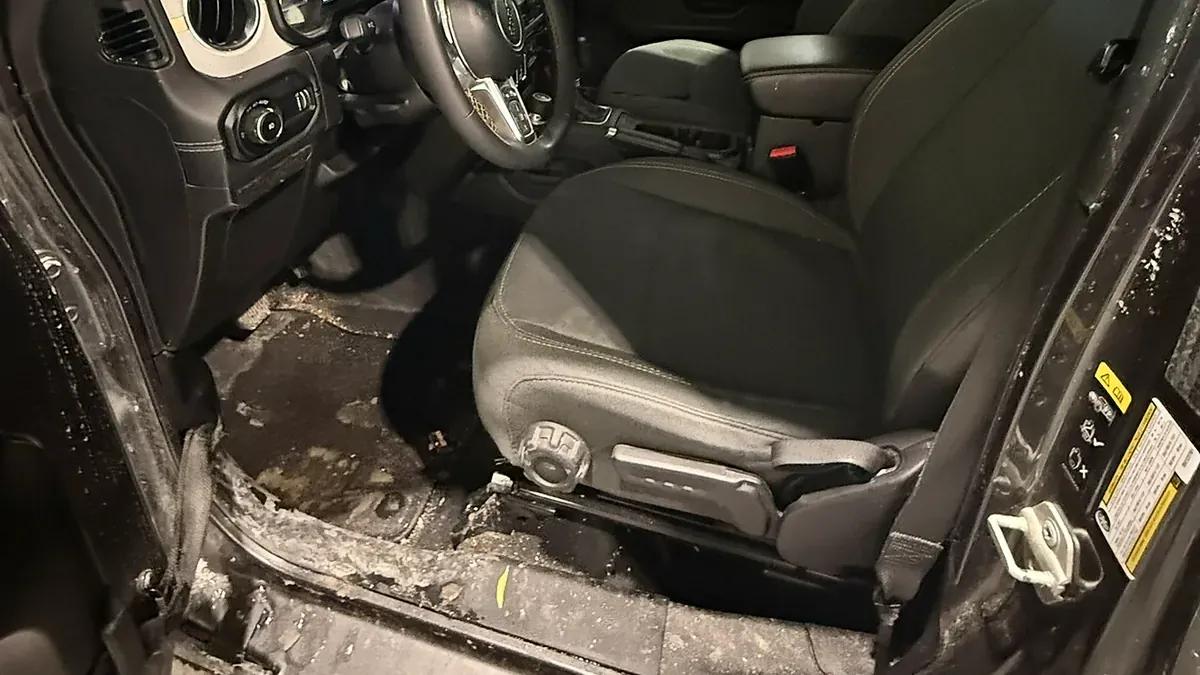
It only takes one slushy week. The carpet under your feet dries out, and there it is: a crusty white line where the wet patch used to end, and another one on the passenger side. Vacuuming does nothing, and by February the whole footwell looks grey. Here is what those lines are, how to get them out yourself, when it is a job for extraction, and how to keep the salt off the carpet for the rest of the winter.
The short answer
- Salt lines are dried salt water. A vacuum cannot lift them, but water dissolves them.
- The DIY fix is a 50/50 mix of white vinegar and hot water, a stiff brush, and a towel or wet vacuum to pull the dissolved salt back out.
- Dampen, do not soak. There is wiring under the carpet in most cars, and wet padding goes musty.
- A stain that keeps coming back is in the padding. That needs hot water extraction, which flushes and pulls the salt out from underneath.
- Custom-fit mats with raised edges stop most salt reaching the carpet in the first place.
What those white lines actually are
Mississauga keeps its roads clear with salt and brine. The City says it salts roads when there is less than five centimetres of snow and pre-treats some priority roads with brine before winter weather arrives. Peel Region describes its brine as a 23% concentration of rock salt in water. All of it ends up as slush, the slush comes in on your boots, and it soaks into the carpet.
When that wet patch dries, the water leaves and the salt does not. It is left behind as a white crust, thickest along the edge where the patch dried last, which is why salt stains look like tide lines. Some de-icers used on driveways and sidewalks, such as calcium chloride, also pull moisture out of the air, so a patch can stay dark and damp for days. Carpet that stays damp is how a car ends up with a musty smell by spring. Our odour removal guide explains why that smell is hard to shift once it starts.
How to remove salt stains yourself
You will need: white vinegar, hot water, a spray bottle, a stiff scrub brush, a few clean microfibre towels and, if you have one, a wet/dry shop vacuum.
- Vacuum first. Get the loose, crunchy crystals out while they are dry, so you are not turning them back into salt water.
- Mix the solution. Cars.com recommends a 50/50 mix of household white vinegar and hot water in a spray bottle or bucket.
- Spray lightly. Dampen the stain, do not flood it, and keep the spray away from electrical connections, seat wiring and anything under the seats.
- Let it sit for a minute, then scrub. Work the brush from the outside of the stain towards the middle so you do not push the salt into a bigger ring.
- Pull the salt back out. Blot hard with a dry towel, or better, run a wet/dry vacuum over it. This is the step that actually removes the salt.
- Repeat until no white edge comes back as the patch dries. Old stains usually take two or three rounds.
- Dry it properly. Run the heater with the windows cracked, or leave the car somewhere warm. Take carpet mats inside to dry and never put them back damp.
The vinegar smell fades as the carpet dries. If the stain looks gone when wet but a white line reappears the next day, the salt is deeper than the surface, which is the next section.
Rubber and all-weather mats
These are the easy part. Take them out, hose or rinse them, use a little mild soap on any white film, and let them dry before they go back in. Skip tire shine or silicone dressings on mats, because they make the surface slippery under your feet and the pedals.
When DIY is not enough
- The stain keeps coming back as it dries. The salt is in the padding under the carpet, and spraying from the top only moves it around.
- The carpet still feels damp or smells musty days later.
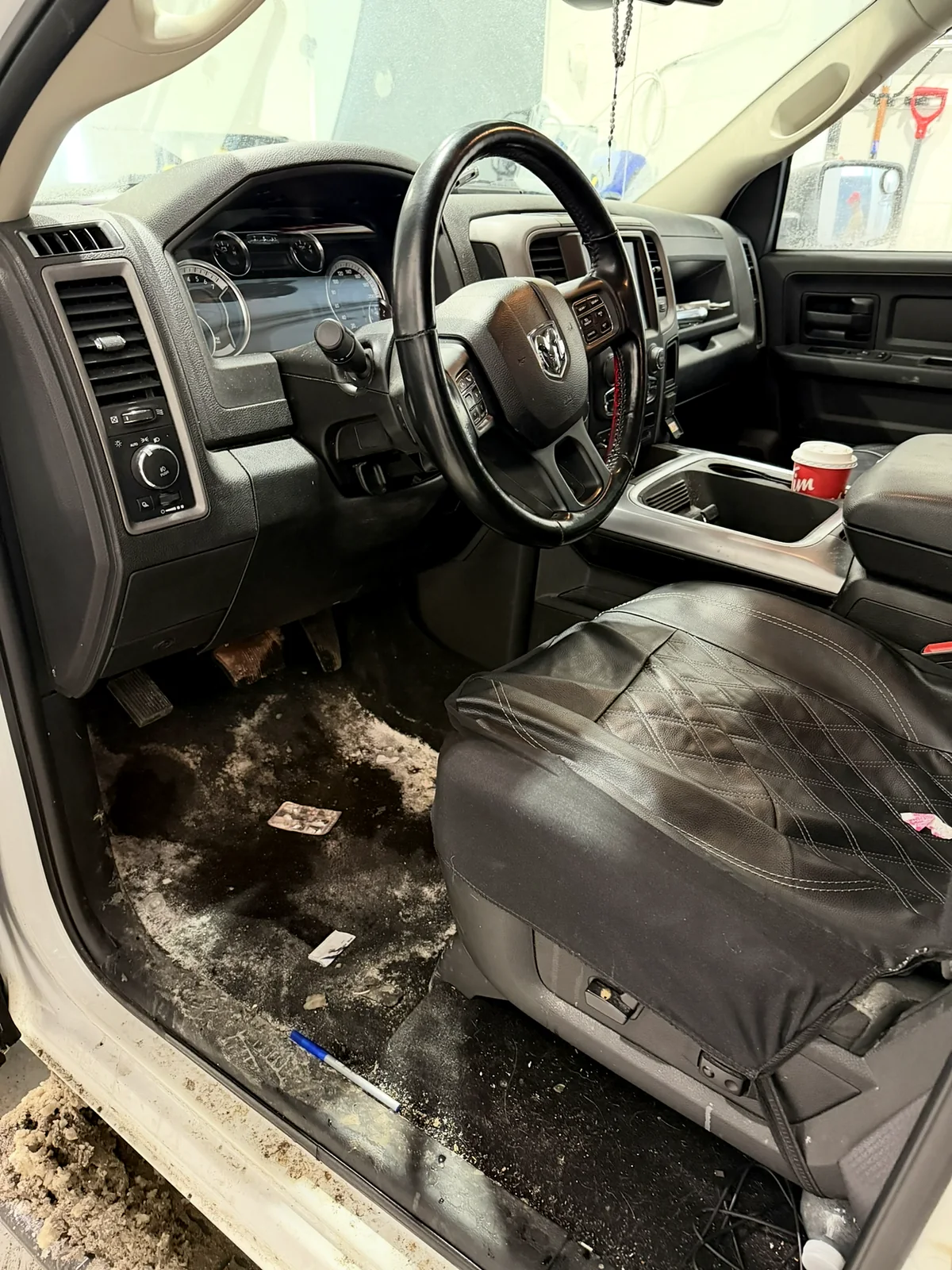
- The whole footwell is grey, not just a line or two.
- There is salt splash on fabric seats or door cards, which need gentler products than carpet.
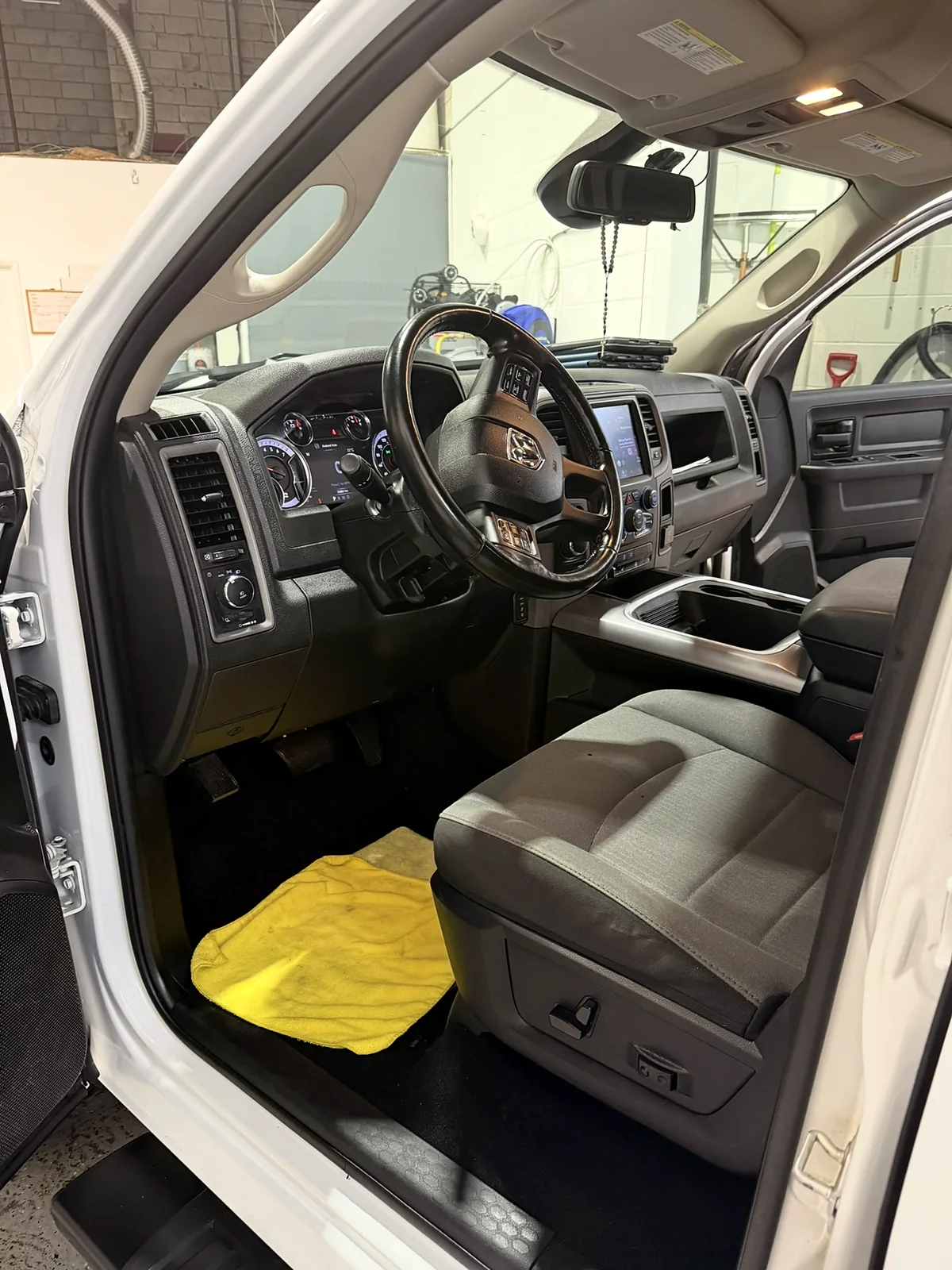
That is where hot water extraction comes in. The machine sprays hot water and a dedicated salt remover into the carpet and pulls it straight back out with strong suction, so the salt leaves with the water instead of drying back into the fibres. We then dry the carpet before the car goes home. Our interior detailing guide walks through the full process.
How to stop salt stains coming back
- Use custom-fit floor mats. The gap a universal mat leaves at the edge of the footwell is exactly where salt and slush reach the carpet. A mat made for your vehicle covers the whole floor, has a raised edge to hold the slush, and stays anchored. Our guide to custom floor mats explains the difference.
- Empty the mats every week. Tip the slush out before it overflows the edge and soaks the carpet.
- Knock your boots off on the door sill before you get in.
- Deal with new stains early. A fresh salt line comes out with one round of vinegar and water. One left until March has had months to soak into the padding.
- Consider interior protection. Our interior ceramic coating add-on helps protect fabric and leather from spills and stains.
Our road salt checklist covers what the salt does to the outside of the car.
Salt stain removal at Cosmo Car Customs
Our Advanced detail includes seat and carpet shampoo, and salt lines come out with hot water extraction and a dedicated salt remover, with the carpet dried before the car goes home. We can fit custom floor mats in the same visit. The price depends on the vehicle and how much salt has built up, and we confirm it before we start. See our detailing packages, custom floor mats, or book at our studio on Atlantic Drive in Mississauga.
Sources
- Cars.com, "How to Remove Salt Stains From Your Floor Mats" (February 2023)
- City of Mississauga, "Bring on the snow: Mississauga is ready for winter" (November 2024)
- Peel Region, anti-icing and pre-wetting
- Our guides to interior detailing, car odour removal and custom floor mats