You have just washed the car, it looks clean, and yet when you run your hand over the hood it feels rough, almost gritty. That roughness is contamination stuck to the paint, and no amount of washing will take it off. A clay bar treatment does. Here is what it removes, how to tell whether your car needs it, and why it matters so much before winter protection goes on.
The short answer
- Clay removes what washing leaves behind. Meguiar's describes its clay as removing bonded surface contaminants such as paint overspray, industrial fallout, tree sap mist and road tar.
- The plastic bag test tells you if you need it. Smooth as glass means no. Rough like fine sandpaper means yes.
- Once or twice a year is enough for most cars. In Ontario, the fall and the spring are the times that matter.
- Done carelessly, it can mark the paint. Always use a lubricant, and throw away clay that hits the ground.
- It comes before wax, sealant, ceramic coating, PPF and paint correction. Protection bonds to clean paint, not to contamination.
What is a clay bar?
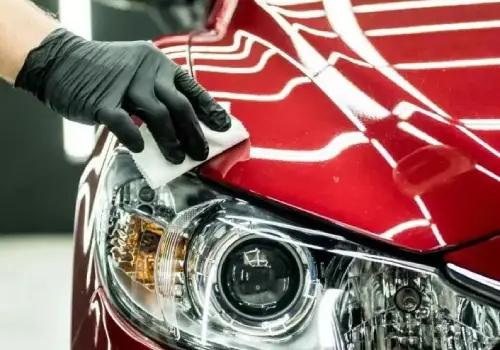
A detailing clay bar is a soft, elastic compound, a bit like modelling putty. You flatten it into a patty, spray the paint with a lubricant and glide it back and forth with light pressure. Anything sticking up out of the paint catches on the clay and is pulled away, while the lubricant lets the clay slide over the clear coat. Meguiar's describes its clay bar as non-abrasive and safe on any paint finish, including clear coats.
Detailers also use synthetic clay mitts and towels, which have a rubbery coating and cover big vehicles faster. They do the same job and need the same amount of lubricant.
What clay removes, and what it does not
Clay removes contamination that sits on top of the paint:
- paint overspray from nearby painting or construction,
- industrial fallout and rail dust,
- tree sap mist and road tar,
- brake dust and grime baked onto the lower panels.
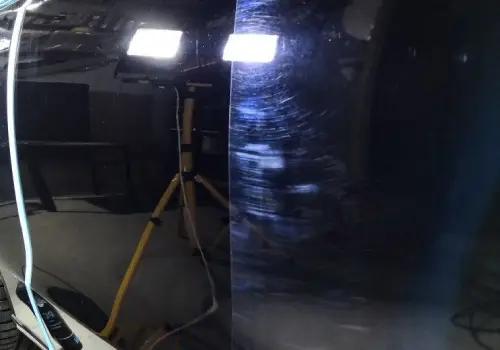
Clay does not fix damage in the paint. Swirl marks, scratches, water spot etching and oxidation sit in the clear coat itself, and removing them takes machine polishing. That is paint correction. Clay also adds no protection of its own. It leaves the paint bare, clean and ready for it.
Iron fallout: the other half of decontamination
Some of the roughness on an Ontario car is tiny iron particles: brake dust from your own car and the traffic around you, plus rail dust from rail lines and industry. They lodge in the clear coat and can rust where they sit, which shows up as orange specks on white and silver paint.
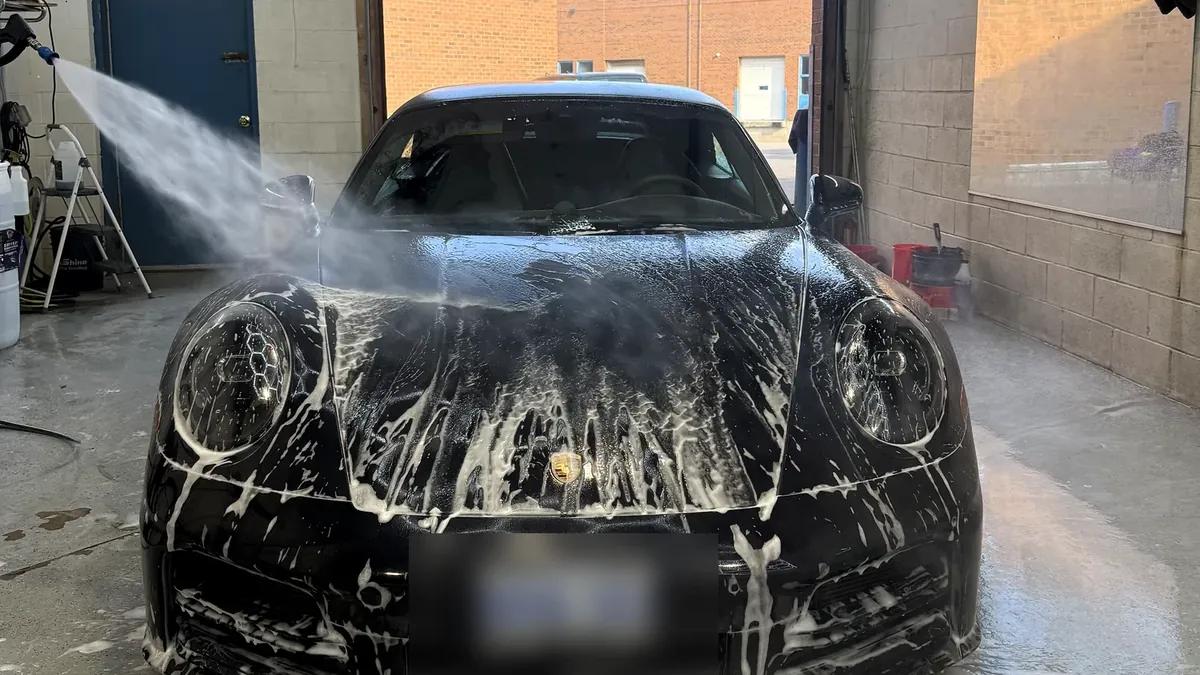
An iron remover deals with them chemically. Gyeon, one of the coating brands we use, describes its iron remover as a fast-acting product that decontaminates surfaces of ferrous deposits, including brake dust and rail dust. Most iron removers change colour, usually to purple or red, where they react with iron, so you can watch the contamination run off the paint. Using one before the clay means the clay has far less left to pick up.
The plastic bag test
- Wash and dry the car, so you are feeling the paint and not loose dirt.
- Put your hand in a thin plastic sandwich bag. The bag exaggerates what you feel, so contamination you would miss with bare fingers becomes obvious.
- Glide your fingertips lightly over the paint: the hood, the roof, the lower doors and the back of the car.
- Read the result. Smooth as glass means the paint is clean. Rough or gritty, like fine sandpaper, means it needs clay.
The lower doors and the rear of the car are usually the roughest, because that is where road grime and brake dust land.
How often should you clay bar your car?
Less often than you might think. Jalopnik suggests two to three times a year as a general guide, every few months for cars that live near the coast or construction, and once or twice a year for a typical suburban car. For most daily drivers in the GTA, that works out as:
- In the fall, before a wax, sealant or ceramic coating goes on for winter, so the protection bonds to clean paint. Our guide to waxing before winter covers the timing.
- In the spring, after a winter of salt and brake dust, as part of a full detail. Our road salt checklist explains what the winter does to the paint.
- Whenever the bag test feels rough, for example after parking near construction or a building being painted.
There is no benefit to claying paint that already feels smooth, so let the bag test decide rather than the calendar.
Can a clay bar damage your paint?
Used properly, clay is gentle. Used carelessly, it can leave fine marks. The rules that matter:
- Never clay dry paint. Keep the surface wet with a clay lubricant or a quick detailer spray, so the clay glides instead of grinding.
- If you drop the clay, throw it away. As Jalopnik puts it, "If you drop the clay, it's dead." It picks up grit from the ground that will scratch the paint.
- Fold the clay often to expose a clean face, and keep the pressure light.
- Leave heavy-grade clay to professionals. It works faster but can mark the paint if you are not careful.
- Protect the paint afterwards. Even careful claying can leave faint marring on soft or dark paint, which a light polish takes out, and the bare paint then needs a wax, sealant or coating.
Why clay comes before wax, ceramic coating and PPF
Meguiar's says wax goes on more easily and lasts longer after claying, and the same idea applies to every kind of protection:
- Wax and sealant bond better and last longer on clean paint.
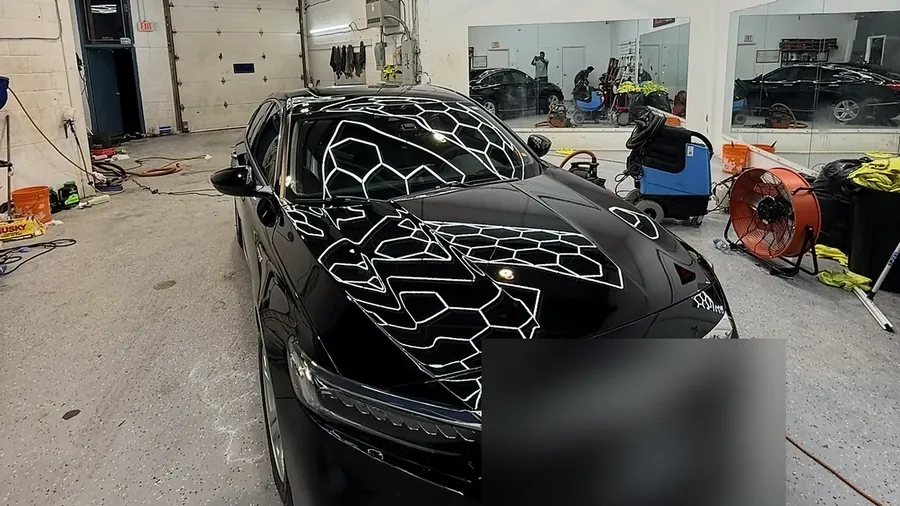
- Ceramic coating locks in whatever is underneath it. That is why every coating we apply starts with a wash and full decontamination, removing the bonded contaminants the coating would otherwise seal in. Our ceramic coating guide explains how long it lasts once it is on.
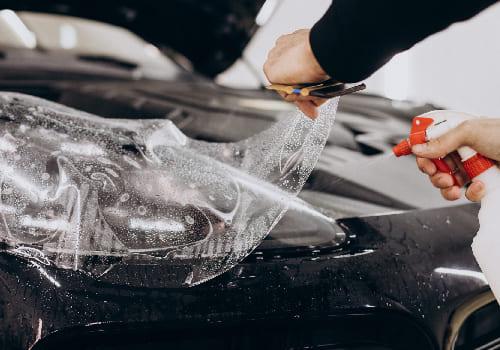
- Paint protection film is clear, so any speck trapped under it shows as a bump for the life of the film.
- Paint correction starts with clean, smooth paint, so the polishing pad is not dragging grit across the car.
Can you clay glass, wheels and coated cars?
- Glass: yes. Clay lifts the film and specks that make wipers streak, and it is a good step before a glass coating.
- Painted wheels: yes, after an iron remover has done most of the work on the brake dust.
- Ceramic coated cars and PPF: ask your installer first. A coated car usually needs a decontamination wash rather than heavy claying, and our coating aftercare guide covers the routine.
- Matte paint and wraps: these need products made for them, so check with us before claying.
DIY or professional?
A clay kit is a reasonable DIY job on a car that is only slightly rough, as long as you work in the shade, one panel at a time, with plenty of lubricant. It is worth handing over when the paint is heavily contaminated, when the car is dark and will show any marring, or when the clay is preparation for a coating, film or correction, where the polish and protection that follow matter as much as the clay itself.
Clay and decontamination at Cosmo Car Customs
Our Advanced detail adds a decontamination wash outside, and every ceramic coating, PPF and paint correction job starts with a wash and full decontamination. We check the paint by hand first, show you what it needs and confirm the price before we start. See our detailing packages or book at our studio on Atlantic Drive in Mississauga.