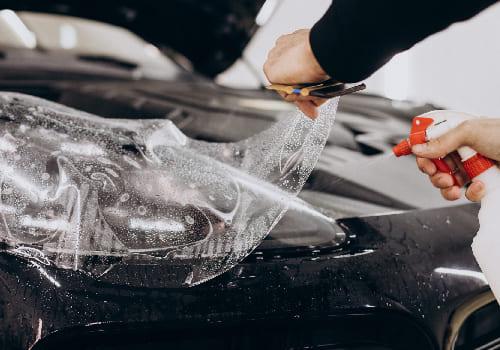
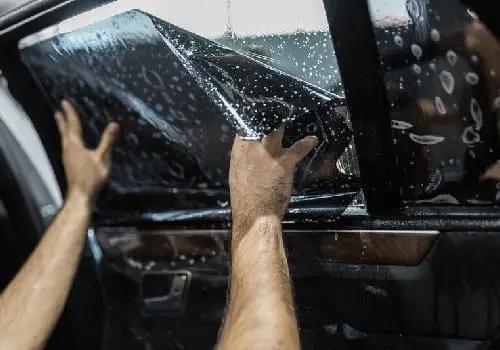
Two cars can have the same shade of tint and feel completely different on a July afternoon. The difference is the film. If you have been comparing tint quotes and wondering why one shop charges twice as much as another for the same darkness, the type of film explains most of it. Here is how the four main types work, which ones fade, which ones interfere with your phone, and which is worth paying for.
The short answer
- Dyed: the cheapest. It darkens the glass but does little against heat, and lower-quality dyes can fade to purple.
- Metallized: reflects heat with a thin metal layer, but metal can interfere with phone, GPS and radio signals.
- Carbon: no metal, a matte finish and better heat rejection than dyed, without the fading.
- Ceramic: non-metal ceramic particles that target infrared heat, the best clarity and the highest price.
- UV is not the difference. Good films of every type block around 99% of UV. Heat rejection, durability and signal are.
The four types of window tint
Dyed film
Dyed film gets its colour from dye. The dye absorbs light, so the glass looks darker and glare drops, but it does little against infrared, the part of sunlight you feel as heat. It is also the type most likely to change colour. Film maker Madico explains that with low-quality dyes the yellow additives fade faster than the blue and red pigments, which is why some tinted windows turn purple over time. Bubbling usually means the adhesive is failing too.
Metallized film
Metallized film has microscopic metal particles that reflect heat away from the glass. It rejects heat well and resists fading, but it often looks shiny from outside, and metal can interfere with signals: phone reception, GPS, radio, and the antennas many cars hide in the glass. Hybrid films that mix dye and metal sit in between.
Carbon film
Carbon film uses carbon particles instead of dye. It has a deep matte black look, holds its colour, contains no metal, and rejects noticeably more heat than dyed film. For many drivers it is a solid middle ground between price and performance.
Ceramic film
Ceramic film uses nano-ceramic particles that are designed to block infrared heat while letting visible light through, so a light shade can still keep the cabin cooler. It is non-metal, which SunTek describes as signal-friendly for phones and in-car electronics, it does not fade the way dye does, and it gives the clearest view out, especially at night. It is also the most expensive type, which is why ceramic quotes cost more.
How to read the numbers on a tint quote
- VLT (visible light transmission) is the shade. It is the percentage of visible light the film lets through, so 5% is very dark and 70% is very light. Lower VLT means a darker window, not necessarily a cooler one.
- UV rejection is the share of ultraviolet the film blocks. Quality films of every type are around 99%, so it is rarely the deciding factor.
- Infrared (IR) rejection is how much of the heat-carrying part of sunlight the film blocks. This is where film types really differ, and where ceramic earns its price.
One caution on IR numbers: manufacturers measure them in different ways. Some quote rejection at a single infrared wavelength, which produces a very high number. Others, like SunTek's Selective IR figure, average across the whole solar infrared range from 780 to 2,500 nanometres, which produces a lower but more complete one. When you compare films, compare figures from the same kind of measurement, ideally from the manufacturers' spec sheets, and treat any single number with care.
Does darker tint mean a cooler car?
Not on its own. Darkness and heat rejection are separate things. A dark dyed film cuts glare but lets much of the infrared heat through, while a light ceramic film can block most of it. That matters in Ontario, where the front side windows have to stay light: a ceramic film lets you keep a legal shade up front and still get most of the heat benefit. Our Ontario tint law guide explains what is allowed on each window.
Tint and your skin
Most people tint for heat, privacy and looks, but UV protection is a real benefit. The Skin Cancer Foundation explains that windshields are laminated glass, which shields drivers from some UVA, while side, back and sunroof windows are tempered glass, which does not block UVA rays effectively. Window film can block more than 99% of UVA and UVB light. On a long commute with the sun coming through the side glass, that adds up.
Which film is worth it?
- Dyed makes sense if price is the only thing that matters, you mainly want privacy, and you do not plan to keep the car long.
- Carbon suits drivers who want a matte black look, no fading and better heat rejection than dyed, without paying for ceramic.
- Ceramic is worth it if you park outside, drive a lot in summer, want a light legal shade up front that still cuts heat, or rely on your phone and GPS in the car.
- Metallized is the hardest to recommend for a modern car full of antennas and sensors.
Why we only install ceramic
We install ceramic film only. All three of our films are ceramic, block 99% of UV, and carry a lifetime warranty against colour fading and peeling:
- Nano-Ceramic, from $150: our entry ceramic film, with strong heat rejection at the lowest price.
- Solar Gard, from $249: Saint-Gobain's ceramic film, with optically clear glass at night and a manufacturer-backed warranty.
- SunTek Evolve, from $299: our top film, fitted by an authorised SunTek dealer with the warranty registered at install.
Prices cover the four side windows and the back windshield, before HST. Our tint prices guide breaks down what each one includes, the window tinting page lets you preview shades on a real car, and our aftercare guide covers the first few days after install.