
Steam cleaning gets sold as the answer to every dirty interior: it sanitises, it deodorises, it gets out every stain. Some of that is true, some of it depends on how it is done, and some of it is marketing. Here is what steam actually does inside a car, what the research says about germs and dust mites, where steam works best, and where it should never go.
The short answer
- Steam loosens grime with heat, not with soap or soaking. It uses very little water, so fabric is not left wet.
- It kills dust mites. Two studies found no surviving mites in steam-treated carpet.
- It is not instant disinfection. In a lab study, killing bacteria with steam took minutes of contact, not a quick pass.
- It is one step, not the whole job. Steam loosens dirt. Extraction, brushing and wiping take it away.
- Some things should never be steamed. Leather, screens, electronics and airbag covers need gentler methods.
What steam cleaning actually does
A steam cleaner heats water into very hot, low-moisture vapour and pushes it through a nozzle or brush. On a seat or a cup holder, the heat softens what soap and a cloth struggle with: dried sugar from spilled coffee, body oil on a headrest, grease ground into a seat track, or salt crust in the corner of a footwell. Because so little water goes in, the material dries much faster than after a shampoo, which matters in a car with wiring and padding under the carpet.
What steam does not do on its own is remove anything. It loosens dirt and leaves it on the surface. That is why a proper steam clean is always followed by agitation with a brush, a wipe with a clean microfibre towel, and extraction, which flushes fabric and pulls the dirty water back out.
What the research says about dust mites and germs
Most of the good evidence comes from homes rather than cars, but fabric and carpet behave the same way.
- Dust mites. In a 1995 study in Clinical and Experimental Allergy, a domestic steam cleaner was used on carpet seeded with dust mites. No live mites were found in the treated carpet at any point over four months, while mite numbers in untreated carpet kept climbing. In a Glasgow flat, the dust mite allergen Der p 1 fell by 86.7% in steam-treated carpet compared with 4.7% in untreated areas.
- More passes, less allergen. A 2004 study in the Journal of Medical Entomology used a steam cleaner at about 96°C on carpet and mattresses. It killed all the mites in both. In carpet, allergen fell by 61.4% with two passes and by 100% with five.
- Germs need time. A 2015 study in BMC Research Notes tested a portable dry steam system at 180°C on glass surfaces. Common bacteria were significantly reduced after two minutes, some took five minutes to be killed, and a yeast and a mould needed seven. The authors called steam a practical and effective way to disinfect surfaces, but the contact times show that a quick pass over a seat is a deep clean, not hospital-grade disinfection.
For a car, that means steam is very good at killing mites and lifting grime from fabric, and it helps on germs, but no detailer should promise that a steam clean has sterilised your interior.
Where steam works best in a car
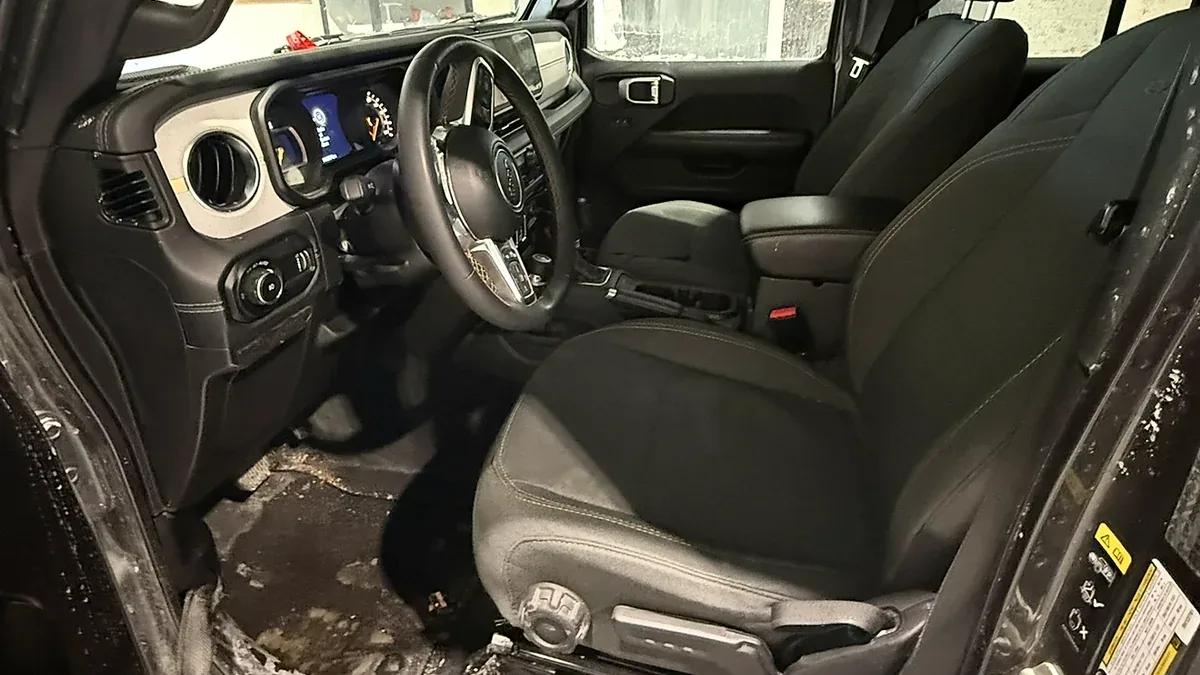
- Fabric seats, especially the seams and the gap between the seat and backrest, where crumbs and grime collect.
- Carpet and floor mats, before extraction, to loosen ground-in dirt and salt residue. Our salt stain guide explains why extraction is the step that actually pulls salt out.
- Cup holders, door pockets and the centre console, where sticky spills dry hard.
- Air vents, seat rails and pedals, the tight spots a cloth cannot reach.
- Hard plastic trim with textured grain, in short passes with the towel right behind the nozzle.
Where steam should never go
Steam cleaner makers are clear about this. Bissell's own user guide for its handheld steam cleaner says not to use it on leather, synthetic fabrics, velvet or other steam-sensitive materials, and warns against painted, plastic or vinyl-covered surfaces when using it to sanitise. Inside a car, that translates into a short list of no-go areas:
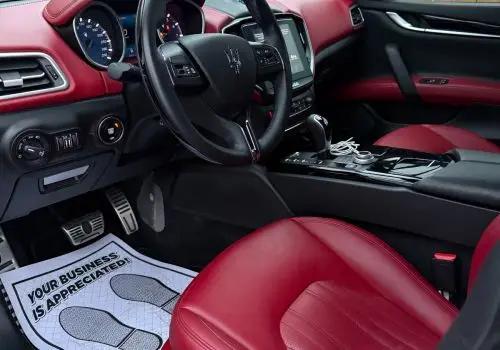
- Leather seats and trim. Leather is cleaned with a dedicated leather cleaner and then conditioned instead.
- Screens, instrument clusters and switches, where heat and moisture can get into electronics.
- Airbag covers, marked SRS or Airbag on the steering wheel, dashboard, seats and pillars.
- The headliner, where heat and moisture can soften the glue that holds the fabric up. It gets a gentle spot clean instead.
- Soft-touch and coated plastics, which can mark if the nozzle is held in one spot.
Steam vs shampoo vs extraction
- Steam loosens dirt with heat, kills mites and dries fast. It is best for spot work, hard surfaces and the first pass on fabric.
- Shampoo uses a cleaner and a brush to break down soil and stains in seats and carpet.
- Hot water extraction sprays clean hot water deep into the fabric and pulls it straight back out with strong suction, taking the loosened dirt, salt and cleaner with it.
They are not competitors. A heavily used interior usually needs all three: steam to loosen, shampoo where there are stains, and extraction to remove everything and leave the fabric clean rather than just damp. Our interior detailing guide walks through the full process.
If you steam clean your own car
- Vacuum first, so the steam is not turning loose dirt into mud.
- Test a hidden spot, such as the underside of a seat or a corner of carpet under a mat.
- Keep the nozzle moving and wipe straight behind it with a clean microfibre towel.
- Do not soak anything. If fabric feels wet rather than warm and slightly damp, you are holding the nozzle too long.
- Keep it away from leather, screens, electronics and airbag covers.
- Dry the car properly, with the heater on and the windows cracked, especially in winter. Damp carpet that stays damp is how a musty smell starts, as our odour removal guide explains.
Steam cleaning at Cosmo Car Customs
Our Advanced detail is the deep interior clean: the headliner and vents are steam cleaned, fabric seats and carpets are steamed, shampooed and hot water extracted, and leather is shampooed and conditioned. Premium adds wax applied by hand and an engine bay detail, and both usually take four to six hours. Seats and carpets are dried before you collect the car, but they can feel cool for a few hours. The price depends on the vehicle and its condition, and we confirm it before we start. See our detailing packages or get a quote for our studio on Atlantic Drive in Mississauga.
Sources
- Colloff MJ, Taylor C, Merrett TG, "The use of domestic steam cleaning for the control of house dust mites", Clinical and Experimental Allergy (1995)
- Glass EV, Needham GR, "Eliminating Dermatophagoides farinae spp. and their allergens through high temperature treatment of textiles", Journal of Medical Entomology (2004)
- Bagattini M et al., "Effect of treatment with an overheated dry-saturated steam vapour disinfection system on multidrug and extensively drug-resistant nosocomial pathogens", BMC Research Notes (2015)
- Bissell, Steam Shot 2635M user guide (safety instructions)
- Our guides to interior detailing, salt stains and odour removal